Anthropic has introduced Claude Duet, a standalone AI agent designed to help professionals and small-business owners manage work proactively. Announced on October 21, the assistant can identify tasks that need attention, prepare daily briefings and continue working in the background without requiring users to issue prompts for every action. The launch puts Anthropic in competition with other AI companies developing proactive agents, including OpenAI and Meta. Unlike a conventional chatbot that primarily responds to user requests, Claude Duet aims to identify priorities and help complete tasks across connected applications.
What the Claude Duet AI Agent Does
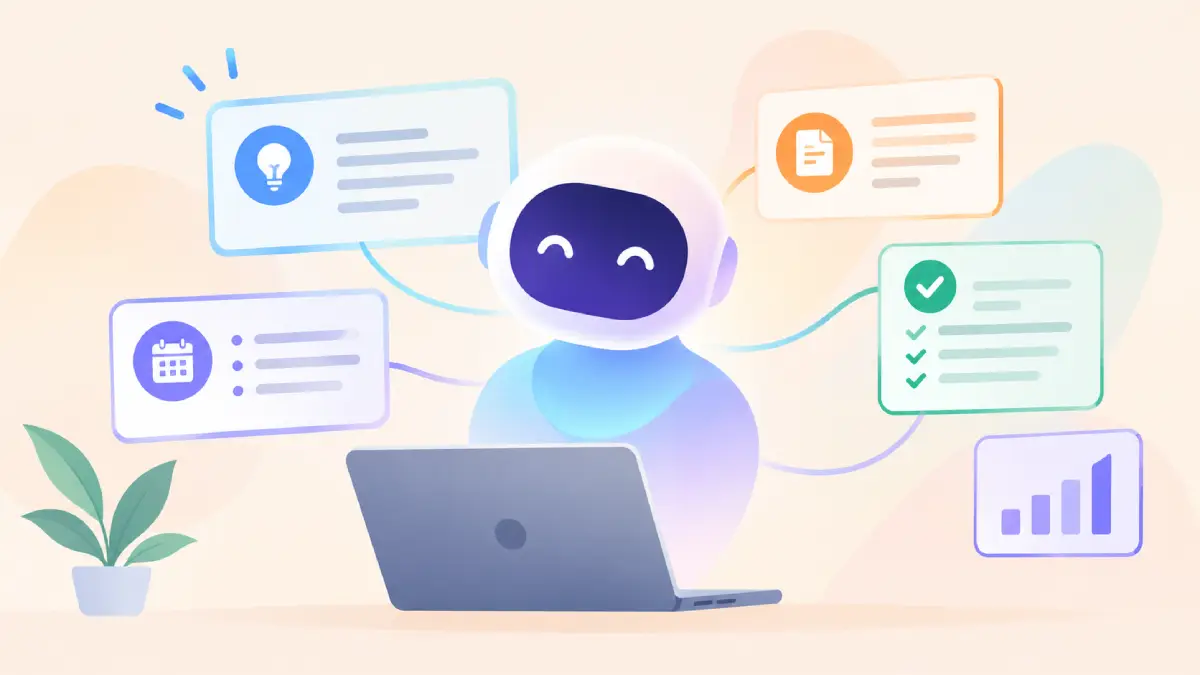
Claude Duet is designed to reduce the time spent tracking work across multiple applications. It sends users a daily briefing covering important messages, calendar events and other tasks, then provides notifications when something requires attention.
Its key capabilities include:
- Daily briefings and task management to highlight priorities, schedule meetings and prepare next steps.
- Business productivity to build dashboards, create financial forecasts, develop prototypes and build web applications.
- Background task execution through a virtual machine with its own browser, allowing work to continue when users step away from their devices.
- Application integrations through more than 6,000 connectors and plugins, including tools such as Gmail, Slack and business software.
- Business purchasing support through payment services such as Stripe’s Link digital wallet and Shopify’s Shop Pay.
Built on Claude Opus 5.5, Duet carries over memory, skills and connected applications from a user’s existing Claude account. This reduces the setup required to begin assigning tasks. The agent checks connected accounts every few hours rather than continuously, helping manage usage limits. However, it may miss information that arrives between checks.
Safety Controls in Claude Duet
Anthropic says Claude Duet is designed to keep users involved in sensitive decisions. It can read information, prepare documents and draft communications independently, but requires approval before sending messages, making payments, signing documents or deleting information. The system follows a credential-handling design intended to prevent direct access to users’ passwords and sign-in tokens. Anthropic has also introduced additional safeguards to help prevent sensitive information, including credit card numbers and government identification details, from being disclosed improperly.
Some actions remain prohibited even with user approval, including securities trading and transfers of money between accounts. Despite these protections, Duet is still an early-stage product. It can misinterpret conversations or incorrectly assess the urgency of a task. Its browser activity is also not yet visible to users, limiting their ability to observe its work directly.
Availability and Pricing of Claude Duet
Claude Duet is available as a research preview through a waitlist, initially for eligible Claude Pro and Max subscribers in the United States. It can be accessed through standalone apps for iOS and Android, as well as claude.ai. The service shares existing Claude plan usage limits, meaning background checks and complex tasks contribute to consumption. Larger assignments, such as building financial models or presentations, may require substantially more usage than ordinary conversations.
Anthropic has not announced wider availability for Team or Enterprise customers. Users in other countries, including India, should not assume they can access the preview yet.
Why the Claude Duet AI Agent Matters
Claude Duet reflects a broader shift in AI development from conversational assistants toward agents that can take on ongoing tasks and identify problems before users explicitly ask for help. OpenAI’s Dots and Meta’s Muse are pursuing similar proactive-assistant concepts, increasing competition in the market for AI-powered productivity tools.
For professionals and small businesses, the potential benefit is less time spent switching between applications, tracking deadlines and preparing routine work. However, Duet’s long-term value will depend on its accuracy, reliability, security and ability to distinguish urgent tasks from less important activity. As a research preview, Claude Duet offers an early look at Anthropic’s approach to proactive AI assistance, while its limitations and restricted availability show that the technology is still developing.