1Password has launched a new platform called 1Password for Agents that allows supported AI assistants to log in to websites and complete tasks without seeing or storing users’ passwords. Announced on October 22, the platform aims to make AI-powered automation safer by allowing people to approve account access while keeping their login credentials protected. AI assistants are increasingly being used to handle everyday tasks, such as planning trips, managing online activities and preparing reports. However, many of these tasks require access to personal or work accounts. Sharing passwords directly with an AI assistant can expose sensitive information beyond the user’s control. 1Password’s new platform aims to address this problem by allowing AI agents to use saved credentials without receiving the passwords themselves.
The Login Problem
AI agents can research products, compare prices, fill out forms and perform other online tasks. However, when an agent encounters a login page, users may need to sign in manually or share their credentials with the AI. Giving an AI assistant a password can create security risks because sensitive information may become part of its conversation history or other systems that process the data. 1Password for Agents introduces another option, allowing supported AI assistants to request access to saved logins without directly handling the credentials.
How It Works
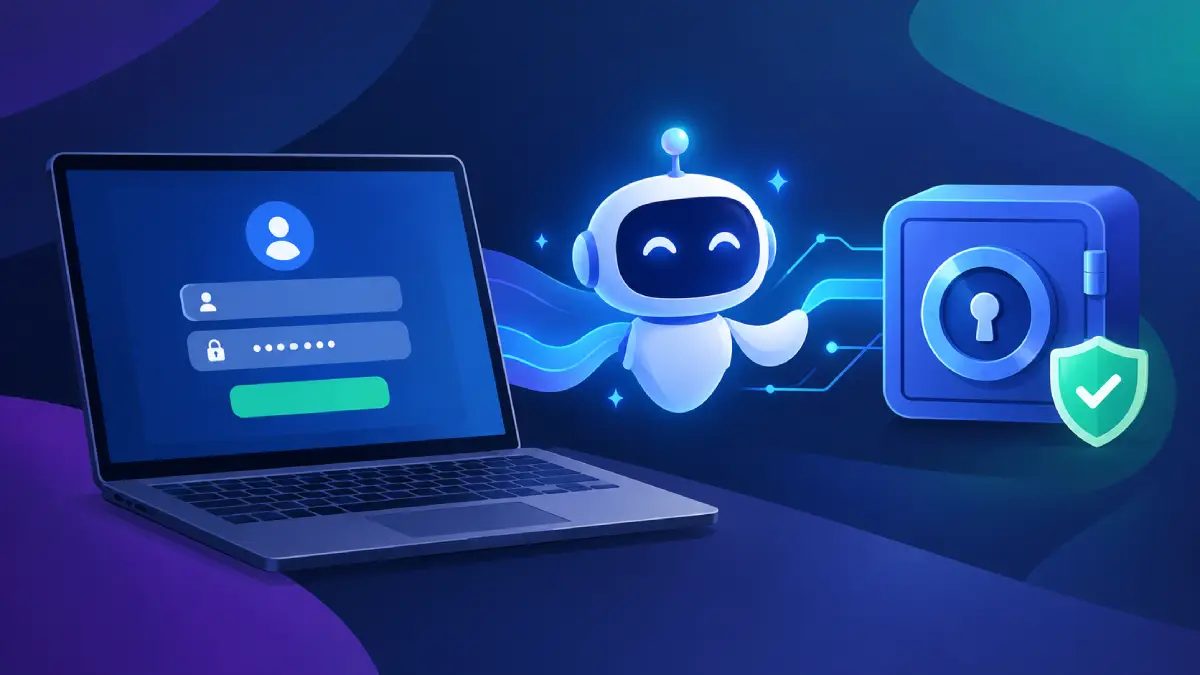
When an AI agent reaches a login page, it requests the credential needed to continue its task. The user can review which login is being requested and decide whether to approve or deny access. If the request is approved, 1Password fills the required information directly into the website’s login form. The password and any required one-time authentication code remain protected rather than being sent to the AI model. This approach allows the assistant to continue its task after signing in, while the user retains control over whether access is granted.
Supporting Multiple AI Assistants
The new platform is designed to work with AI assistants from several companies, rather than being limited to a single service. Integrations for Meta’s Muse and SpaceXSI’s Grok Bot are rolling out, while integrations involving Anthropic’s Claude Duet, OpenAI’s ChatGPT Work and dots, and Town’s Townie have been announced as coming soon. Additional integrations are also planned. The availability and capabilities of each integration may differ, so users should not assume that every supported AI assistant can use the platform immediately.
Additional Security Protections
1Password is also working to make browser-based AI automation safer through features designed to protect sensitive information during login and form filling. Its browser extension includes an Agentic Mode that helps protect the password interface when an AI agent takes control of a browser. The aim is to prevent the agent from directly accessing saved passwords while allowing approved login actions to proceed. These protections are intended to reduce the risks associated with giving AI agents access to online accounts. However, keeping a password hidden does not eliminate every security concern. An AI agent may still be able to view account information or perform actions after signing in, depending on the website and the permissions available to it.
Who Can Use It
1Password for Agents is available at no additional cost to eligible 1Password Individual and Family subscribers with accounts hosted on 1Password.com. Accounts hosted on 1Password.eu and 1Password.ca are not currently supported. Access also depends on the availability of the relevant AI integration. Users should check the supported platforms and requirements before attempting to connect an assistant.
Why It Matters
The launch reflects a broader shift in how people use AI. Instead of simply answering questions, AI agents are increasingly expected to carry out tasks that require access to websites, applications and personal accounts. Allowing these agents to use saved credentials without directly receiving passwords could make automation more convenient while reducing the need to share sensitive login information. For everyday users, the idea is straightforward. They can let a supported AI assistant handle certain online tasks while approving the account access it needs. Although this approach adds an important layer of control, users should still review requests carefully and remember that secure login credentials alone cannot prevent every unwanted action an AI agent might take.