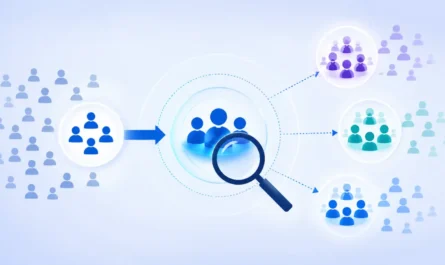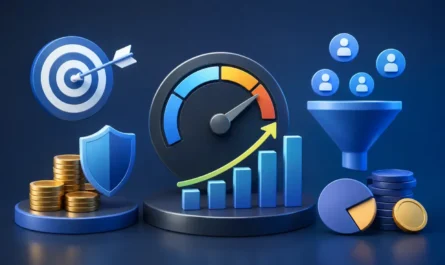

Every business running ads eventually wants to achieve one important goal: turning advertising efforts into measurable revenue. While awareness and engagement campaigns help businesses build interest and reach potential customers, the Sales objective is designed for businesses that want to encourage direct purchases and valuable customer actions. It helps Meta identify people who are more likely to complete a conversion, allowing advertisers to focus their budget on users who show signals associated with purchase behavior.
1. What Is the Sales Campaign Objective?
The Sales objective is designed for businesses that want to drive purchases and other valuable conversion actions. Instead of optimizing primarily for clicks, impressions, or engagement, Meta uses conversion signals to help find people who are more likely to complete the selected action. Businesses commonly use Sales campaigns for e-commerce purchases, subscriptions, bookings, and other revenue-related conversions.
2. How Meta’s Sales Campaigns Actually Work
Meta’s ad delivery system uses machine learning to analyze signals from people’s interactions and conversion activity to predict who is more likely to complete the selected action. The system then uses these predictions to help deliver ads to people who are more likely to convert.
Accurate conversion data from tools such as the Meta Pixel and Conversions API gives Meta stronger signals for optimization. As conversion data accumulates, the system can use those signals to improve delivery decisions.
3. Where Sales Campaigns Can Convert
Sales campaigns can support different conversion paths depending on how a business completes its sales process. Businesses can drive customers to websites, apps, product catalogs, or eligible messaging experiences where purchase-related actions can take place.
This allows different types of businesses to use the Sales objective according to where their conversions occur.
4. Sales Campaign Conversion Paths
The Sales objective can be used with different conversion paths depending on the business and campaign setup:
- Website conversions: Optimize toward actions completed on a website, such as purchases.
- App conversions: Drive valuable actions that occur inside a mobile app.
- Catalog sales: Use product catalogs to show relevant products to potential customers.
- Messaging purchases: In eligible messaging setups, optimize toward purchases completed through customer conversations.
The available options depend on the selected conversion location, setup, and account eligibility.
5. Understanding Conversion Events
Sales campaigns use trackable conversion events to tell Meta which actions matter to the business. For an e-commerce business, these may include View Content, Add to Cart, Initiate Checkout, and Purchase.
The selected conversion event tells Meta which action to optimize toward. For businesses focused on revenue, Purchase is generally the key conversion event.
6. Performance Goals Advertisers Can Choose
Sales campaigns can use different performance goals depending on the desired outcome and available campaign setup. A business may focus on maximizing the number of conversions or, when eligible, maximizing the value generated from conversions.
Maximize conversion value is particularly useful when purchases have different order values because Meta can optimize toward customers who are more likely to generate higher-value conversions.
7. Advantage+ and Automation
Meta uses Advantage+ features to automate parts of Sales campaigns and help improve delivery efficiency. Depending on the campaign setup, automation can assist with audience selection, placements, creative delivery, and other campaign decisions.
Automation gives Meta more flexibility to find people likely to convert, but it does not replace the need for strong creative, accurate conversion tracking, a competitive offer, and a good customer experience.
8. Metrics Worth Watching
Several metrics are useful when evaluating Sales campaign performance:
- Purchases
- Cost per purchase
- Purchase conversion value
- Return on ad spend (ROAS)
- Purchase conversion rate
- Average order value
Together, these metrics show how effectively a campaign turns advertising spend into purchases and revenue.
9. Why Tracking Accuracy Matters
Accurate conversion tracking is important because Meta relies on conversion signals to optimize Sales campaigns. Tools such as the Meta Pixel and Conversions API can help businesses send purchase and other conversion data to Meta.
If important conversion events are missing or incorrectly recorded, Meta has fewer reliable signals to use for optimization and measurement.
10. What Influences Campaign Performance
Several factors can influence how well a Sales campaign performs, including:
- The strength of the offer
- The quality of the creative
- The website or checkout experience
- The quality of available conversion signals
- The accuracy of conversion tracking
- The quality and freshness of the product catalog
Weak tracking, outdated product information, poor product pages, or a weak offer can limit campaign performance even when the ad itself is well designed.
11. Building Effective Creative
Effective Sales creative should clearly communicate the product, its benefits, and why someone should consider buying it. Product demonstrations, customer reviews, offers, and trust signals can help reduce uncertainty and support purchase decisions.
Testing different formats, such as video, carousel, and static images, can help identify which creative approaches generate stronger results before increasing budget on successful ads.
12. Mistakes That Hold Campaigns Back
Common problems include:
- Optimizing for clicks when the actual goal is purchases
- Launching with incomplete or inaccurate conversion tracking
- Providing too few useful conversion signals for optimization
- Sending traffic to weak product or checkout pages
- Skipping creative testing
- Allowing product feeds to become outdated
These issues can make it harder for Meta to optimize effectively and harder for advertisers to identify what is limiting performance.
13. When This Objective Makes Sense
The Sales objective is best suited to businesses that want to drive purchases and other revenue-related conversions. It is commonly used by e-commerce businesses, online service providers, subscription businesses, and apps that generate revenue through customer actions.
Choose Sales when the primary goal is measurable conversion activity rather than simply generating traffic, engagement, or awareness. In short, the Sales objective helps Meta optimize delivery toward people who are more likely to complete the selected conversion. Strong results depend on accurate tracking, useful conversion signals, a strong offer, effective creative, and a smooth customer experience.