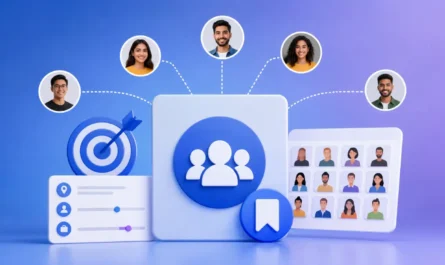

Audience targeting is one of the most important parts of Meta Ads because it helps advertisers determine who they want to reach. A campaign can have strong creative and messaging, but it still needs to reach people who are relevant to the business and its campaign goal.
Meta provides different ways to define or build audiences. Core Audiences use Meta’s available targeting criteria, Custom Audiences use existing customer data or interactions, and Lookalike Audiences help find new people similar to an existing source audience. Meta also increasingly uses machine learning to determine which people are most likely to take the desired action. Because of this, the audience inputs provided by advertisers do not always work as strict delivery boundaries, particularly when automated audience features are used.
1. How Audience Targeting Works in Meta Ads
Advertisers can provide information about the people they want to reach. Depending on the audience setup, this can include location, age, gender, demographics, interests, behaviors, existing customer data or previous interactions with a business. Meta then combines these inputs with its own signals and machine-learning systems to determine which people are more likely to respond to an ad or complete the desired action. This is important because Meta Ads targeting is no longer based only on manually selecting a group of people. Automation plays an increasingly important role in ad delivery.
Audience targeting can also serve different purposes. Prospecting focuses on reaching new potential customers, while retargeting focuses on people who have already interacted with a business.
For example, a business selling running shoes might use Core Audience targeting to reach potential customers based on available audience criteria. It could use a Custom Audience to reconnect with website visitors and a Lookalike Audience to help find new people similar to existing customers.
2. Audience vs Targeting: A Concept Beginners Often Mix Up
The terms audience and targeting are closely related, but they are not exactly the same.
- Audience: The group of people you want your ads to reach. Example: People interested in fitness products.
- Targeting: The criteria or methods used to define or guide who Meta can reach. Example: Location, age, demographics, interests and other available audience inputs.
Think of it this way: the audience describes who you want to reach, while targeting describes how you define or guide that audience on Meta.
This distinction becomes especially important with automated targeting. The audience inputs provided by an advertiser may help guide Meta’s system, but the people ultimately reached can depend on how the campaign’s audience settings work and how Meta’s delivery system optimizes the campaign.
3. Types of Audiences in Meta Ads
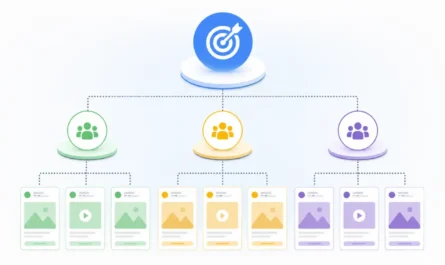
Meta audiences can be understood through three major audience concepts: Core Audience, Custom Audience and Lookalike Audience. These audiences are created or defined in different ways and can be used for different advertising situations.
3.1 Core Audience
A Core Audience uses Meta’s available targeting criteria to define who may be eligible to see an ad. Depending on the available options, advertisers can use criteria such as:
- Location
- Age
- Gender
- Language
- Detailed Targeting, including available demographics, interests and behaviors
Core Audience targeting is commonly associated with prospecting, where a business wants to reach potential customers who may not have previously interacted with the brand.
For example, a local fitness business could define an audience based on its service area and relevant demographic or interest signals. Meta can then use these inputs when determining which people are eligible or likely to respond to the campaign.
Core Audience should not automatically be treated as the same thing as a cold audience. Core Audience describes how the audience is defined, while cold, warm and hot audiences describe a person’s relationship with the business or their level of buying intent.
Core Audience targeting and its individual components, such as Location and Detailed Targeting, can be explored separately.
3.2 Custom Audience
A Custom Audience allows advertisers to create an audience from existing customer data or interactions with a business. Depending on the available source, a Custom Audience can include people who:
- Visited a website
- Interacted with a Facebook Page or Instagram account
- Engaged with content or ads
- Used an app
- Appeared in a customer list or another supported data source
Custom Audiences are commonly used for retargeting because the people in these audiences have already shown some level of interaction or relationship with the business.
For example, an online store could create a Custom Audience of people who visited its website but did not purchase. The business could then show those people a relevant ad to encourage them to return and complete their purchase.
Custom Audiences can also be used as a source for other audience strategies, including Lookalike Audiences. The different Custom Audience sources and the process of creating them can be covered separately.
3.3 Lookalike Audience
A Lookalike Audience helps advertisers find new people who are similar to an existing source audience.
For example, a business could use a customer audience as the source and create a Lookalike Audience to help Meta identify other people who share similar characteristics or behaviors.
Lookalike Audiences are mainly useful for prospecting and audience expansion because they allow businesses to move beyond their existing customers or website visitors. The quality of the source audience is important. A source made up of valuable customers can provide a more useful signal than a source containing a large number of people who have shown very little interest in the business.
Lookalike Audiences are therefore not simply about making an audience larger. Their purpose is to give Meta a relevant source from which it can identify potential new customers. With automated audience setups, a Lookalike Audience can also be provided as an audience suggestion rather than necessarily acting as a strict boundary for delivery.
4. Advantage+ Audience and Automated Targeting
Advantage+ Audience represents Meta’s increasingly automated approach to audience targeting.
Instead of requiring advertisers to manually define every person who should receive an ad, Meta can use machine learning to find people who are more likely to take the desired action. Advertisers can provide audience inputs that help guide the system. These can include information such as Custom Audiences, Lookalike Audiences and other audience targeting inputs.
An important distinction is that some of these inputs can function as audience suggestions, while certain settings can act as audience controls.
This means advertisers should not always assume that every selected audience option creates a strict boundary around delivery. When the campaign setup allows Meta to expand beyond an audience suggestion, its system can explore additional people who may be likely to achieve the campaign objective.
For example, an advertiser could provide a Lookalike Audience as a signal of the type of customer they want to find. Meta may then use its broader delivery system to identify additional people who appear likely to perform the desired action.
Advantage+ Audience is therefore better understood as an automated audience approach, rather than simply a fourth audience type equivalent to Core, Custom and Lookalike Audiences.
5. Cold, Warm and Hot Audiences
Audiences can also be classified according to their relationship with a business and their level of buying intent.
5.1 Cold Audience
A cold audience consists of people who have little or no previous interaction with the business.
For example, someone who has never visited a company’s website, engaged with its content or purchased from it could be considered part of a cold audience.
5.2 Warm Audience
A warm audience consists of people who have already interacted with the business in some way.
Examples include people who:
- Visited a website
- Watched a video
- Engaged with social media content
- Interacted with an ad
- Visited a product page
5.3 Hot Audience
A hot audience consists of people showing stronger buying intent.
Examples include people who:
- Added a product to their cart
- Started checkout
- Requested information
- Visited an important conversion page
- Repeatedly interacted with a product or service
Cold, warm and hot are marketing classifications, not separate Meta audience types.
For example, a Custom Audience can contain both relatively warm users and people showing very strong buying intent. Similarly, a Core Audience can be used for prospecting but does not technically mean that every person in it is cold.
Understanding this difference prevents advertisers from confusing how an audience is created with where a person is in the customer journey.
6. Audience Size and Reach in Meta Ads
Audience size refers to the estimated number of people who match the selected audience definition or criteria. Reach refers to the number of people who are actually shown the ad. These numbers are not the same.
For example, an audience may contain a large number of potentially eligible people, but the campaign may reach only a portion of them depending on budget, campaign duration, auction conditions, optimization, competition and other delivery factors.
A smaller audience is not automatically better, and a larger audience is not automatically worse. Overly narrow targeting can reduce the number of opportunities available to Meta’s delivery system. On the other hand, an audience that is broader than the business’s actual customer base may not provide useful signals.
The appropriate audience size depends on the campaign goal, available data, budget, creative, market and the amount of flexibility given to Meta’s optimization system.
7. How to Choose the Right Audience Type
The right audience approach depends on what the business is trying to achieve and what data is available.
7.1 Core Audience
Use Core Audience targeting when you want to define an audience using Meta’s available targeting criteria, including location, demographics and Detailed Targeting options such as interests and behaviors.
Common use: Prospecting and reaching potential customers based on available audience inputs.
7.2 Custom Audience
Use Custom Audiences when you want to reach people based on existing customer data or previous interactions with your business.
Common use: Retargeting website visitors, customers, content engagers and other existing audiences.
7.3 Lookalike Audience
Use Lookalike Audiences when you want Meta to help identify new people who are similar to an existing source audience.
Common use: Prospecting and expanding beyond an existing customer or high-value audience.
7.4 Advantage+ Audience
Use Advantage+ Audience when you want Meta’s automated systems to use audience suggestions and available controls while optimizing toward the campaign goal.
Common use: Giving Meta more flexibility to discover people who may be likely to take the desired action.
These approaches are not necessarily mutually exclusive. For example, a business can use a Custom Audience as a source for a Lookalike Audience, while automated audience features can use audience inputs to guide Meta’s delivery.
8. Common Audience Mistakes
Even experienced advertisers can make audience-related mistakes. Some of the most common include:
- Choosing an audience approach that does not match the goal: A business focused on acquiring new customers may need a different approach from one trying to reconnect with existing website visitors or customers.
- Making targeting unnecessarily narrow: Adding too many restrictions can reduce the available audience and limit Meta’s ability to optimize delivery.
- Ignoring existing audiences: Businesses sometimes focus entirely on finding new customers and overlook people who have already interacted with their website, social content or brand.
- Treating Lookalike Audiences as guaranteed delivery boundaries: A Lookalike Audience is a way to help Meta identify similar potential customers. In automated audience setups, it may function as an audience suggestion rather than a strict restriction.
- Treating Advantage+ suggestions as hard targeting restrictions: Advertisers should understand whether an audience input is being used as a suggestion or a control within the campaign setup.
- Creating unnecessary audience complexity: Adding multiple overlapping audiences and restrictions does not automatically improve performance. In many situations, giving Meta enough relevant signals and room to optimize can be more effective than creating highly complicated audience structures.
- Using the same audience approach for every campaign: Different businesses, campaign goals, customer journeys and available data can require different audience strategies.
9. Conclusion
Meta Ads audiences can be understood through three major audience concepts: Core Audiences, Custom Audiences and Lookalike Audiences.
Core Audiences use Meta’s available targeting criteria to define an audience. Custom Audiences are built from existing customer data or interactions with a business, while Lookalike Audiences help Meta find new people who are similar to an existing source audience.
These audience types can also be understood alongside cold, warm and hot audience classifications, which describe a person’s relationship with the business and level of buying intent. Meta’s automated audience systems add another layer by allowing audience inputs to guide its machine-learning models. In Advantage+ Audience setups, some inputs can act as suggestions while certain settings can serve as controls.
Understanding the difference between audience types, audience inputs, targeting criteria and automated delivery helps advertisers make better audience decisions without assuming that every selected targeting option acts as a strict limitation.