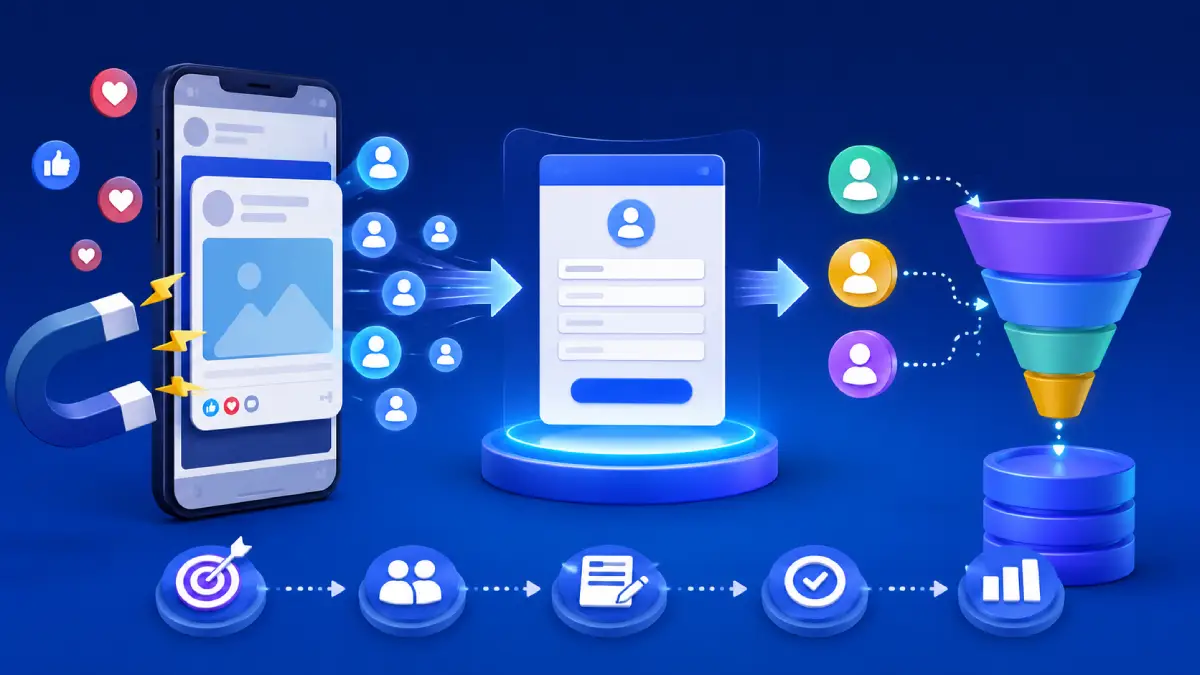
Running a business today often requires a reliable way to generate potential customer inquiries, and Meta Ads provides tools designed specifically for lead generation. When businesses want to turn interested users into potential customers, simply reaching more people is not enough they need a way to collect information, start conversations, or encourage direct inquiries. The Leads objective helps advertisers achieve this by optimizing ad delivery toward people who are more likely to complete a lead action, such as submitting their details, requesting information, booking an appointment, or contacting a business. Meta uses signals from user activity and interactions to improve campaign delivery and find people who are more likely to take the desired action.
1. What Is the Leads Objective in Meta Ads?
The Leads objective is a campaign objective in Meta Ads Manager designed to help businesses collect information from potential customers. Instead of focusing only on generating clicks or website visits, this objective is built around capturing customer interest through actions such as submitting contact details, requesting more information, or starting a conversation. Meta optimizes campaign delivery based on the selected lead action, helping businesses reach people who are more likely to provide their information or connect with the business.
Some of the most common actions counted as leads include:
- Filling out a form
- Requesting contact from a sales rep
- Asking for a price quote
- Booking an appointment
- Signing up for a product demo
- Registering for an account or newsletter
2. How a Meta Leads Campaign Actually Works
When a person sees a lead advertisement on Facebook or Instagram, they can complete a specific action selected by the advertiser, such as filling out a form, sending a message, or making a phone call. Each completed action provides signals that Meta’s delivery system uses to understand which users are more likely to take similar actions. As more people interact with the campaign, Meta’s machine learning system improves delivery and helps show ads to users who have a higher probability of becoming leads.
3. Where Leads Can Be Collected
3.1 Instant Forms
Instant Forms allow users to submit their information directly within Facebook or Instagram without visiting an external website. Basic details such as name, email, and phone number can often be filled automatically, making the submission process faster and easier. Advertisers can also add custom questions to collect additional information and better understand potential customers. Some businesses can also include appointment scheduling options after form submission, allowing users to take the next step without leaving the platform.
3.2 Website Leads
Website leads allow businesses to send interested users to an external website or landing page where they can complete a lead form. This option gives businesses more control over the design, customer experience, and information collected during the lead process. Website forms are useful when businesses need detailed customer information or want to create a customized lead-generation journey.
3.3 Messaging Leads
Messaging leads allow businesses to generate potential customers through conversations on platforms such as Messenger, Instagram, and WhatsApp. Instead of completing a traditional form, users can communicate directly with a business and share their requirements through messages. Businesses can use automated questions and responses to guide conversations, answer common queries, and identify users who show stronger interest in their products or services.
3.4 Calling Leads
Calling leads allow potential customers to directly contact a business through phone calls after interacting with an advertisement. This option is useful for businesses where customers prefer immediate communication, such as service providers, consultants, and local businesses that depend on phone inquiries.
4. The Two Instant Form Types
4.1 More Volume forms
More Volume forms are designed to make the lead submission process quicker and easier for users. They reduce friction by keeping the form experience simple, which can help businesses generate a higher number of submissions. This option is useful when the main goal is collecting more leads, but businesses may need additional qualification methods to identify the most valuable prospects.
4.2 Higher Intent Forms
Higher Intent forms add an additional review step before users submit their information. This allows people to check their details and confirm their interest before completing the form. While this extra step may reduce the total number of submissions, it can help businesses receive leads from users who show stronger intent.
5. Choosing a Lead Optimization Goal
- Maximize Number of Leads focuses on generating the highest possible number of lead actions within the campaign budget. Meta’s system looks for people who are more likely to complete the selected lead action, helping businesses increase the number of submissions.
- Maximize Conversion Leads focuses on finding people who are more likely to become valuable customers by using additional quality signals, such as customer conversion data provided by the business.
6. Types of Leads Businesses Commonly Generate
- Sales leads, from people asking about a purchase
- Service leads, from those requesting consultations or service details
- Appointment leads, for scheduling meetings or visits
- Registration leads, covering webinars, courses, trials, or event sign-ups
7. Why Lead Quality Matters Just as Much as Quantity
Generating a large number of leads does not always guarantee better business results. Some leads may have strong purchase intent, while others may only provide information without taking further action. Businesses need to balance lead quantity with lead quality by creating relevant offers, asking useful questions, and identifying prospects who are more likely to become customers. Adding qualifying questions can help separate highly interested users from people with lower intent.
8. Metrics Worth Tracking
- Leads: Measures the total number of people who completed the desired lead action, such as submitting a form, sending a message, or making a call.
- Cost Per Lead (CPL): Shows the average amount spent to generate one lead and helps evaluate campaign efficiency.
- Conversion Rate: Measures the percentage of users who complete the lead action after interacting with the advertisement.
- Qualified Leads: Represents the number of leads that match the business requirements and have stronger potential to become customers.
9. What Influences Campaign Performance
Several factors influence the performance of a Meta Leads campaign, including the quality of the advertisement, strength of the offer, audience relevance, form or messaging experience, and the number of questions users need to complete. A simple and clear lead process can improve completion rates, while unnecessary steps may reduce submissions. The speed and quality of follow-up after receiving leads also play an important role because timely responses can improve the chances of converting interested prospects into customers.
10. Practical Tips for Better Results
To improve Meta Leads campaign performance, businesses should keep forms simple and ask only for information that is necessary. A clear offer and strong messaging can help attract the right audience, while qualifying questions can improve lead quality when needed. Connecting lead data with a CRM system helps businesses manage follow-ups more efficiently. Testing different creatives, offers, and lead collection methods can also help identify which approach generates the best results.
11. Final Thoughts
Meta’s Leads objective gives businesses multiple ways to collect potential customer information through forms, websites, messages, and phone calls. The platform’s optimization system helps advertisers reach people who are more likely to complete lead actions based on available signals and campaign data. However, successful lead generation depends on more than collecting submissions businesses must focus on attracting the right audience, creating valuable offers, and following up effectively to turn leads into customers.