Saved Audience has been part of Meta’s advertising toolkit for years, but the way it fits into a campaign strategy in 2026 looks quite different from how it worked when it first launched. If you’ve been running Meta Ads for a while, you’ve probably built one of these audiences without giving it much thought. Today, with Meta pushing advertisers toward AI-driven delivery, it’s worth understanding exactly what a Saved Audience still does, what it no longer controls, and where it fits alongside newer options like Advantage+ Audience.
1. What is a Saved Audience in Meta Ads?
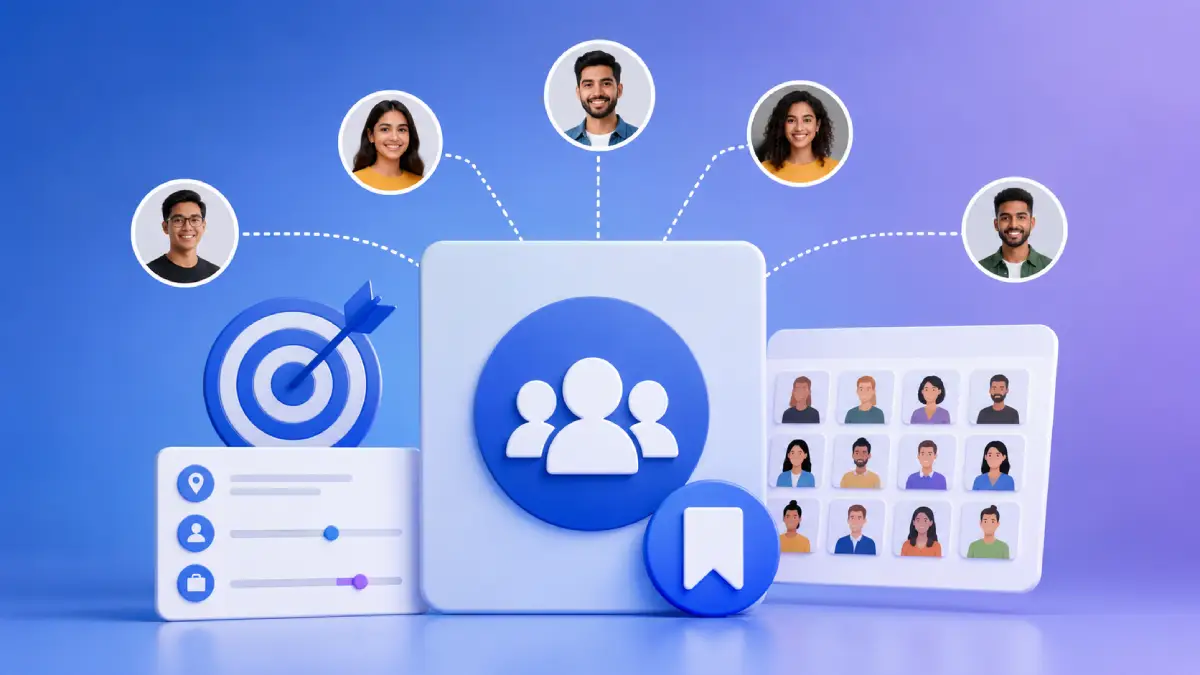
A Saved Audience is a targeting configuration you build once inside Ads Manager and store for reuse in future ad sets. Instead of rebuilding the same location, age, gender, language, and interest selections every time you launch a campaign, you save the combination and pull it up whenever you need it. It appears under the Audience section when creating an ad set, and it’s also listed separately in the Audiences tab of Ads Manager, where you can edit or delete it.
2. Why Meta Introduced Saved Audience
Before this feature existed, advertisers managing several campaigns had to recreate identical targeting parameters over and over, which wasted time and introduced inconsistency between ad sets. Saved Audience solved that by letting marketers store a proven setup and apply it consistently across campaigns. It also made it easier to test one variable at a time, since the audience itself stayed fixed while creative or budget changed.
3. How Saved Audience Works
3.1 What Gets Saved
A Saved Audience stores your manually selected audience settings, including location, age range, gender, language, and detailed targeting choices such as demographics, interests, and behaviors. Depending on the campaign setup and available options inside Ads Manager, it may also preserve additional audience settings such as exclusions or other targeting preferences.
3.2 What It Doesn’t Save
Campaign objective, budget, bid strategy, placements, creative assets, and optimization events are all set independently at the ad set or ad level. A Saved Audience is purely a targeting shortcut; it has no influence over how much you spend or where your ads appear.
4. Saved Audience and Core Audience Targeting
Saved Audience is essentially a stored version of manually selected audience settings inside Meta Ads Manager. Historically, these manual selections were associated with Meta’s Core Audience targeting approach, where advertisers defined audiences using demographics, interests, behaviors, and location. Because Saved Audience is created from advertiser-selected inputs, it represents the traditional manual targeting approach rather than data-based audience types such as Custom Audiences or Lookalike Audiences.
5. Is Saved Audience a Cold Audience?
In most cases, yes. Since it targets people based on characteristics rather than prior interaction with your brand, a Saved Audience typically reaches new prospects rather than people who already know your business. This makes it useful for top-of-funnel awareness and prospecting, but it’s a different tool from warm or hot audiences built from past website visitors, engagers, or existing customers.
6. Saved Audience vs Other Meta Audience Types
6.1 Saved Audience vs Custom Audience
Saved Audience targets people based on selected traits like interests or location. Custom Audience targets people who’ve already interacted with your business, such as past purchasers, page engagers, or website visitors captured through the Meta Pixel or Conversions API.
6.2 Saved Audience vs Lookalike Audience
Saved Audience relies on manually chosen targeting signals such as demographics, interests, behaviors, and location. Lookalike Audience works differently by using an existing source audience, such as customers, website visitors, or engaged users, and finding new people who share similar characteristics with that group.
6.3 Saved Audience vs Advantage+ Audience
This is where the biggest shift in Meta Ads targeting can be seen today. Advantage+ Audience uses Meta’s machine learning system to find people who are likely to take action, using advertiser-provided audience information as signals to guide delivery. Instead of relying only on manually selected interests and demographics, Meta can expand beyond those inputs when its system predicts better performance. Some settings, such as location, age requirements, language, and exclusions, may continue to act as controls depending on the campaign setup, while other audience inputs often function as suggestions rather than strict limitations.
7. How Saved Audience Has Changed in Modern Meta Ads
A few years ago, advertisers had much more direct control over audience creation, often building campaigns around detailed combinations of interests, demographics, and behaviors. Today, Meta increasingly relies on artificial intelligence and machine learning to determine who is most likely to respond to an ad. With the growth of Advantage+ Audience and broader automated delivery options, manual targeting has become less of a strict control system and more of an input that helps guide Meta’s algorithm. As a result, Saved Audience now works best as a starting point, testing framework, and organizational tool rather than the only factor determining campaign performance.
8. When Should You Use Saved Audience?
Saved Audience still earns its place in specific situations. It remains useful when you don’t yet have enough first-party customer data, such as email lists, CRM records, or website visitor history, to build a Custom or Lookalike Audience. It also works well for:
- Local businesses targeting a defined geographic area
- Niche products with a clearly understood customer profile
- Driving traffic to blog posts or educational content where visitors are new to your brand
- Testing interest-based hypotheses before scaling spend
- Campaigns where certain audience restrictions or manual controls are required, including regulated categories such as housing or employment ads
9. Best Practices for Saved Audiences
Ground your audience choices in real customer research rather than guesswork about who might be interested. Avoid narrowing an audience so much that it can’t generate enough delivery data. Don’t rely on interest selections alone as a proxy for buying intent, and test several audience hypotheses side by side rather than committing to one. Revisit and update saved configurations regularly, since Meta continues to update available targeting options, and pair any audience setup with strong creative, since that now plays a larger role in delivery than targeting alone.
10. Common Saved Audience Mistakes
The most frequent mistakes include stacking too many interests into one audience, assuming interest targeting automatically represents purchase intent, and creating audiences that are too narrow for Meta’s delivery system to optimize effectively. Extremely restricted audiences can limit Meta’s ability to find enough potential customers, reduce learning opportunities, and increase costs. Advertisers should also review saved audiences regularly because Meta continuously updates targeting options and removes or changes certain audience selections over time.
11. Saved Audience in a Modern Meta Ads Strategy
Rather than treating Saved Audience as a standalone performance strategy, advertisers should view it as one part of a broader audience framework. Saved Audiences can help with prospecting, testing, and organizing manual targeting ideas, while Custom Audiences and Lookalike Audiences provide valuable first-party data signals. Combined with Meta’s automated delivery systems, including Advantage+ Audience where available, these audience types help advertisers balance audience control with machine learning optimization.
12. Conclusion
Saved Audience remains a practical organization and testing tool inside Meta Ads Manager, but it’s no longer the main driver of campaign performance the way it once was. Modern advertisers get the best results by treating it as one piece of a broader strategy that also includes Custom Audiences, Lookalike Audiences, and Advantage+ Audience, using each where it naturally fits rather than leaning on manual targeting alone.
13. Frequently Asked Questions
What is a Saved Audience in Meta Ads?
It’s a stored targeting configuration based on location, age, gender, language, and interests that you can reuse across campaigns.
Is Saved Audience still available?
Yes, though it now functions more as an input alongside Meta’s AI-driven targeting rather than the primary targeting method.
Is Saved Audience a cold audience?
Generally yes, since it targets people based on traits rather than existing interaction with your business.
What targeting options can be saved?
Location, age, gender, language, and detailed targeting selections such as demographics, interests, and behaviors.
Is Saved Audience better than Advantage+ Audience?
Neither is universally better; Saved Audience provides more manual control, while Advantage+ Audience allows Meta’s system to find potential customers using machine learning and broader delivery signals.
Can Saved Audience be used for retargeting?
Saved Audience is mainly used for prospecting because it is based on manually selected audience characteristics. Retargeting is usually created with Custom Audiences built from previous interactions, such as website visitors, customers, or people who engaged with your content.