If you’ve spent any real time in Meta Ads Manager in recent years, you’ve probably noticed that some older targeting methods no longer work the way they used to. Meta has been quietly reshaping how advertisers control who sees their ads, and audience exclusions are one of the areas that changed the most. What used to be a simple checkbox next to an interest category has turned into a more deliberate process built around Custom Audiences. This piece breaks down what exclusions actually are today, how they work, and where they fit into a smart campaign strategy in 2026.
1. What Are Audience Exclusions in Meta Ads?
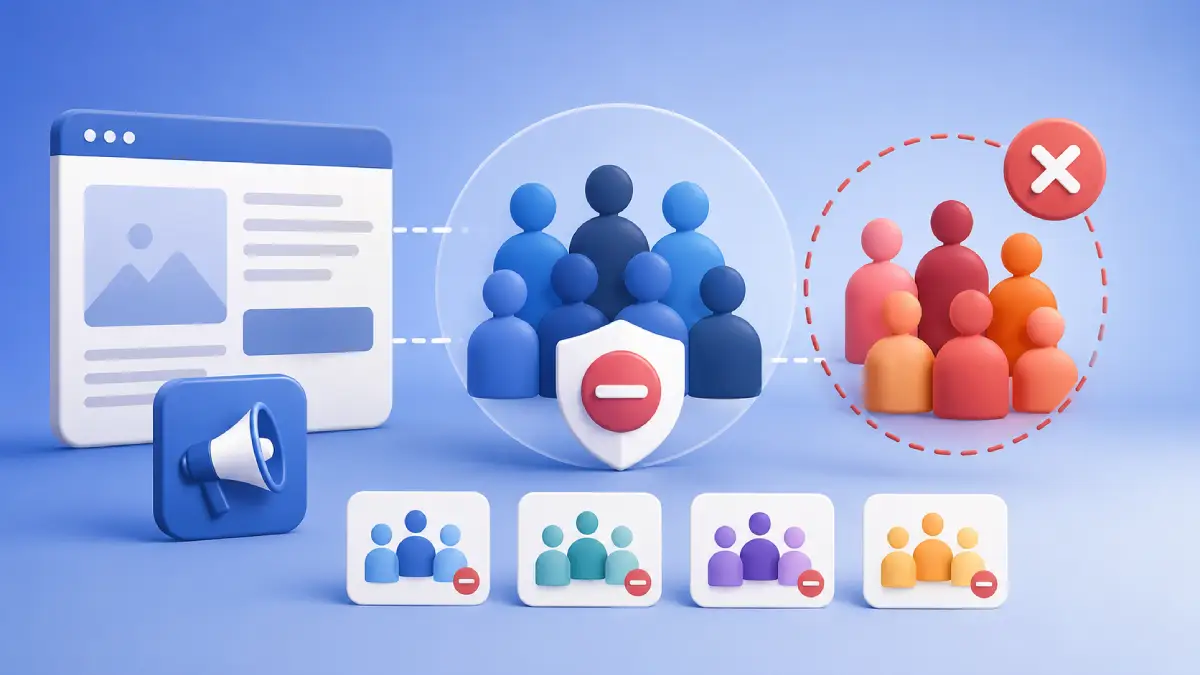
An audience exclusion is a setting that tells Meta not to show a specific ad to a defined group of people, even if those people would otherwise match your targeting. Think of it as a filter that sits on top of your main audience, removing certain segments before your ad ever gets served.
Advertisers use exclusions for a simple reason: not every ad is meant for every person. Someone who already bought your product doesn’t need to see an ad pushing them toward a first purchase. Someone who already filled out a lead form doesn’t need another prompt asking for the same information. Excluding these people saves budget and keeps messaging relevant.
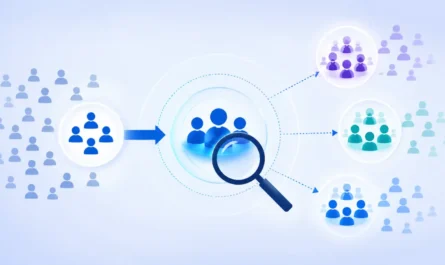
The difference between inclusion and exclusion is straightforward. Inclusion defines who you want to reach; exclusion defines who you want to leave out of that group. Both work together, and a well-built campaign usually needs a bit of each.
Within a broader strategy, exclusions play a supporting role rather than a starring one. They don’t build your audience, but they refine it, making sure your budget goes toward people who are actually likely to respond to that specific message.
2. How Audience Exclusions Work in Meta Ads
Exclusions are applied at the ad set level, inside the Audience section under Audience Controls. This is where you set which audiences should be excluded from a given ad set, separate from the audience suggestions Meta uses to guide delivery.
The main tool for this job is the Custom Audience. You upload a list, connect a data source, or build a rule-based audience, and then choose to exclude it rather than include it. Meta uses that audience data during delivery, and people who match an excluded Custom Audience are excluded from that ad set’s delivery.
Audience controls today are best understood as a mix of restrictions, such as location, minimum age, language availability, exclusions, and Special Ad Category settings, combined with audience suggestions, such as age, gender, detailed targeting, and audience inputs like Custom Audiences or Lookalike Audiences. That distinction matters because it tells you which levers Meta still treats as strict boundaries and which ones it treats as loose hints.
Exclusions remain available even inside Advantage+ Audience campaigns, Meta’s more automated targeting mode. You have less manual control over audience expansion in Advantage+ Audience, but Custom Audience exclusions remain an important way to restrict delivery to specific groups.
3. Common Use Cases for Audience Exclusions
There are a handful of situations where exclusions consistently make sense:
- Removing existing customers from acquisition campaigns aimed at new buyers
- Excluding people who already purchased a specific product from sales-focused ads
- Leaving out leads who already submitted their contact details, so they’re not asked twice
- Keeping cold prospecting campaigns focused on people who have not yet visited your website
- Preventing app install ads from reaching people who already have the app
- Filtering out highly engaged users when the goal is to reach fresh, unfamiliar audiences
Each of these examples solves the same underlying problem: wasted spend on people who’ve already moved past that stage of the funnel.
4. Custom Audiences Used for Exclusion
Meta gives advertisers several types of Custom Audiences that can double as exclusion lists. The most common ones include:
- Customer List Audiences, built from uploaded contact data such as emails or phone numbers
- Website Custom Audiences, based on Pixel or Conversions API tracking of site visitors
- Lead Form Audiences, made up of people who’ve already submitted a form
- Facebook Page Engagement Audiences, covering people who’ve interacted with your Page
- Instagram Engagement Audiences, built from interactions with your Instagram account, including available engagement actions
- App Activity Audiences, tracking specific in-app actions
- Offline Activity Audiences, connected to in-store or offline conversion data
Any of these can be flipped from an inclusion target into an exclusion filter, depending on what the campaign needs.
5. Audience Exclusions with Advantage+ Audience
Advantage+ Audience is Meta’s AI-powered audience targeting and optimization feature, and it changes how much control advertisers have over targeting in general. Instead of manually picking interests and demographics, you give the system a starting point and let it find people likely to convert.
This is where the distinction between suggestions and restrictions becomes important. Under Advantage+ Audience, many audience inputs such as age, gender, and detailed targeting may be treated as suggestions, while certain controls such as location, minimum age, language availability, and exclusions can remain restrictions depending on campaign settings. In other words, Meta’s algorithm can wander outside your suggested demographics, but it won’t ignore an exclusion list.
That means Custom Audience exclusions remain one of the important control options advertisers have inside an increasingly automated system. That said, piling on too many exclusions can shrink the pool of people Meta has to learn from, which can slow down optimization. The smarter approach is to use exclusions only where there’s a clear reason, not as a blanket restriction.
6. Best Practices for Audience Exclusions
A few habits separate advertisers who use exclusions well from those who over-rely on them:
- Only exclude a group when there’s a concrete business reason, like avoiding overlap with existing customers
- Keep exclusion lists updated regularly, since stale audiences can accidentally block the wrong people
- Match your exclusion strategy to the actual goal of the campaign, whether that’s acquisition, retention, or reactivation
- Avoid excluding audiences just out of habit, since unnecessary exclusions can limit how much data Meta has to learn from
- Use exclusions mainly to manage customer lifecycle stages, not as a substitute for better creative or targeting
Exclusions work best as a precision tool, not a catch-all filter.
7. What Changed: Detailed Targeting Exclusions Were Removed
For years, advertisers could exclude audiences based on interests or behaviors, similar to how detailed targeting worked for inclusion. That option has been removed from most current campaign setups as part of Meta’s broader shift toward automated audience delivery. The availability of this feature changed gradually across different campaign types and interfaces.
Meta has stated that its testing showed campaigns using broader targeting without detailed targeting exclusions could achieve improved performance in certain cases, which is part of why the company frames this as a net positive rather than a loss of functionality.
This sits alongside a wider cleanup of the targeting system, including the consolidation of niche interest categories into broader groupings and ongoing changes that require some advertisers to update outdated targeting configurations before continuing delivery.
As a result, Custom Audience exclusions are now the primary method for preventing specific groups of people from receiving campaign delivery. Interest and behavior-based exclusions are no longer available as a targeting exclusion setting.
8. Examples of Audience Exclusion Strategies
Putting all of this together, here’s how exclusions typically show up in real campaigns:
- E-commerce brands running acquisition campaigns exclude existing customers from their buyer list, keeping ad spend focused on genuinely new customers
- Lead generation campaigns exclude people who’ve already completed a form, avoiding repetitive asks and wasted impressions
- Retargeting campaigns exclude recent purchasers once the goal shifts from converting to something like cross-selling
- Funnel-based campaigns use exclusions to move people between stages, making sure someone who’s already converted at the bottom of the funnel doesn’t keep seeing top-of-funnel awareness ads
None of these require anything exotic. They’re built entirely on Custom Audiences, which is exactly why that toolset has become so central to how Meta advertisers manage exclusions today.
9. Conclusion
Taken together, the shift away from interest-based exclusions and toward Custom Audience exclusions reflects where Meta’s ad platform is heading overall: fewer manual levers, more reliance on first-party data, and a growing dependence on automated systems like Advantage+ to fill in the gaps. Advertisers who adapt by building clean, well-maintained Custom Audiences will have an easier time keeping their campaigns efficient than those still relying on targeting methods that are no longer available.