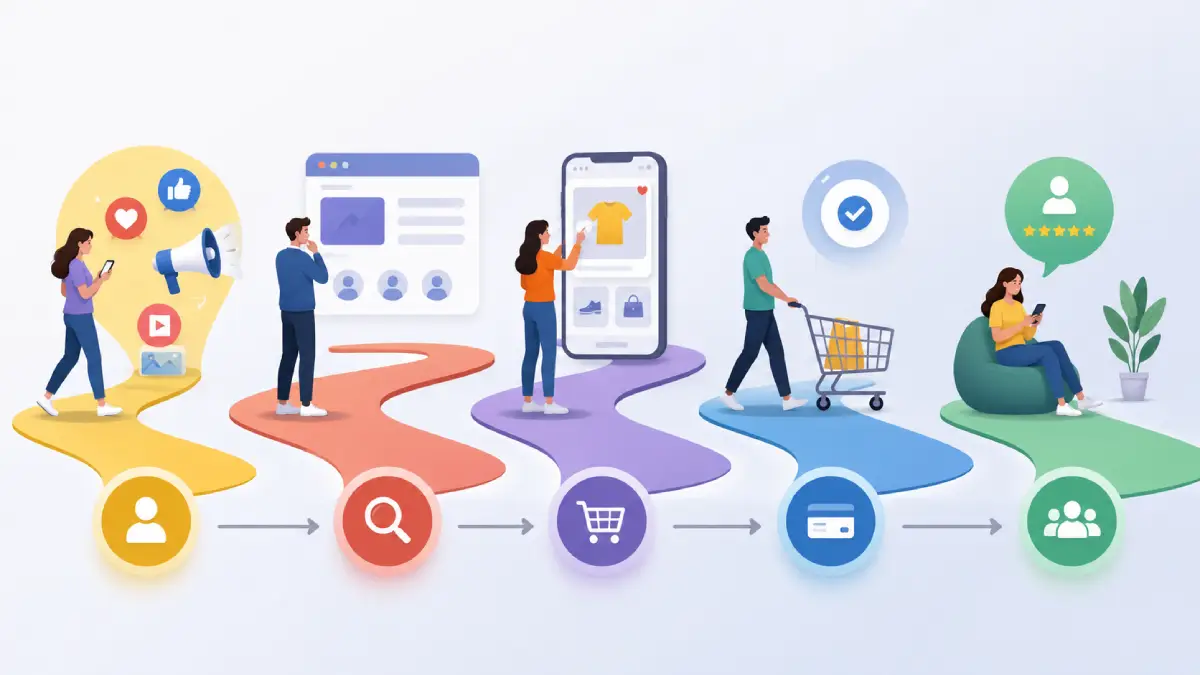
Most people don’t buy something the moment they see an ad. There’s usually a small journey happening in the background, someone notices a brand, thinks about it, checks a few options, and only then decides to buy. Marketers call this the customer journey, and understanding it is one of the reasons some Meta ad campaigns perform better than others.
In simple words, the customer journey is the path a person follows from discovering a brand to becoming a customer. During this process, people usually move through different stages learning about a product, comparing options, making a decision, and sometimes purchasing again in the future. This is why businesses should not show the same advertisement to everyone. A person who has never heard about a brand needs different information compared to someone who has already visited a website or added a product to their cart. Understanding where customers are in their journey helps advertisers create more relevant messages and deliver the right ads at the right time.
Example: A person may first come across a brand’s Instagram Reel, browse the website a few days later, compare a couple of similar products, and finally place an order. That entire sequence from the first scroll-stop to the final checkout is the customer journey.
1. Why the Customer Journey Matters in Meta Ads
Meta Ads provides powerful targeting and optimization tools, but successful campaigns depend on understanding how people make buying decisions. Customer journey mapping helps advertisers understand what customers need at different stages and create ads that match their level of awareness and interest.
- It reveals what a customer actually wants at each point in time
- It allows brands to craft messaging suited to that specific moment
- It stops businesses from throwing “Buy Now” ads at people who haven’t even heard of them
- It sharpens targeting, which usually brings down cost per result
- It makes the overall experience feel more natural instead of pushy
2. The Stages Customers Typically Move Through
Before making a purchase, customers usually move through four basic stages: Awareness, Consideration, Conversion, and Retention. These stages help advertisers understand what customers are thinking, what information they need, and what type of message is most suitable at each point in their journey.
2.1 Awareness Stage
This is the very first touchpoint. The person is discovering the brand for the first time and likely has no idea what the product does or whether it can solve their problem. At this point, they’re thinking things like “What is this?” or “I think I have this issue” or simply “Tell me more.” The goal here isn’t to sell, it’s to introduce.
On Meta, this stage usually includes:
- Short video ads
- Educational or informative content
- Brand-introduction style creatives
- Reach and awareness campaigns
2.2 Consideration Stage
Once someone knows a brand exists, they start comparing it against alternatives. They’re no longer confused about what the product is they’re now deciding whether it’s the right fit. Typical thoughts include “Does this suit my needs?” or “What else is out there?” The job of the advertiser here is to build trust and give useful information, not push for an immediate sale.
Common ad types for this stage:
- Website traffic campaigns
- Engagement-focused ads
- Lead generation forms
- Product demo videos
2.3 Conversion Stage
By now, the person has developed stronger interest and is closer to making a decision. They usually need more confidence, proof, or a reason to take action. This is usually where phrases like “Should I buy this now?” run through their mind. At this stage, customers usually need more confidence, proof, or a clear reason to take action. Meta Ads can help businesses reach both new and existing customers, but understanding the customer’s journey allows advertisers to create messages that match their level of buying intent. A person who already knows a brand may respond well to a direct offer, while someone discovering the brand for the first time may need more information before making a decision.
Meta ad formats suited here include:
- Direct sales campaigns
- Retargeting ads
- Limited-time offers or discounts
- Testimonial and review-based creatives
2.4 Retention Stage
The relationship doesn’t end at checkout. Once someone has made a purchase, the focus shifts to keeping them engaged so they come back again. This stage is about:
- Encouraging repeat orders
- Introducing new products to existing buyers
- Strengthening brand loyalty
- Building long-term customer relationships
After a customer makes a purchase, businesses can continue building the relationship through retention campaigns. These ads focus on encouraging repeat purchases, promoting new products, and keeping existing customers connected with the brand. Meta Ads can help businesses reach previous customers with relevant offers and updates.
3. Customer Journey vs Sales Funnel
These two terms often get used interchangeably, but they’re not quite the same thing. The customer journey looks at things from the buyer’s side what they’re thinking, feeling, and experiencing at each point. The sales funnel, on the other hand, represents the marketer’s approach for moving people from awareness to purchase. Put simply, the journey is the customer’s story, while the funnel is the marketer’s roadmap for that same story. Both concepts are connected, but they look at the buying process from different perspectives.
4. Connecting Customer Journey With Meta Audience Types
Meta’s audience categories map fairly neatly onto the journey stages:
- Cold audiences are usually connected with the Awareness stage because they have no previous interaction with the brand. These people may not know the business yet, so advertisers typically focus on introducing the brand, explaining the product, or creating initial interest.
- Warm audiences are commonly found in the Consideration stage because they have already shown some interest in the business. They may have visited a website, watched a video, interacted with social media content, or engaged with previous ads.
- Hot audiences are closer to the Conversion stage because they have shown stronger purchase intent. These people may have added products to their cart, started checkout, requested information, or taken other actions that indicate they are closer to making a decision.
Note: These connections are general guidelines, not fixed rules. A cold audience can sometimes purchase immediately, while a warm audience may still need more information before converting.
5. Why Retargeting Matters in the Journey
Many customers need multiple interactions with a brand before making a purchase. Buying decisions often involve research, comparison, and trust-building before someone is ready to take action. Retargeting exists to reconnect with people who already showed some interest but didn’t act right away. For instance, someone who watched a brand’s video might later be shown a website-visit ad, someone who browsed a product page might see a sales-focused ad next, and someone who added an item to their cart but left might get a gentle reminder to finish the purchase.
6. Building a Basic Customer Journey Map
Mapping a journey doesn’t need to be complicated. A simple process looks like this:
- Identify who your target customer actually is
- Understand the problem or need driving their search
- Break down the stages they’re likely to pass through
- Decide what message fits each of those stages
- Match your ad creatives and formats to each stage accordingly
7. Mistakes Advertisers Commonly Make
Even experienced advertisers slip up here. Some of the most frequent errors include:
- Running sales-focused ads on audiences who’ve never heard of the brand
- Using one identical message across every stage of the journey
- Skipping retargeting altogether
- Not taking the time to understand what the customer actually needs
- Obsessing over conversions while ignoring awareness and consideration entirely
8. Customer Journey is Not Always Linear
Customers do not always move through the journey in a fixed order. Some people may discover a brand and purchase quickly, while others may take days, weeks, or longer before making a decision. A customer might see an ad, visit a website, leave without buying, and return later after seeing another ad or researching more. This is why businesses use different campaigns and retargeting strategies to stay connected with customers throughout their journey.
9. Conclusion
Customers do not need the same message at every stage they need different things depending on where they stand in their decision-making process. Once a business understands this, its Meta campaigns naturally become more thoughtful and effective. At the end of the day, strong advertising isn’t really about chasing conversions harder; it’s about reaching the right person, with the right message, at exactly the right moment in their journey.