
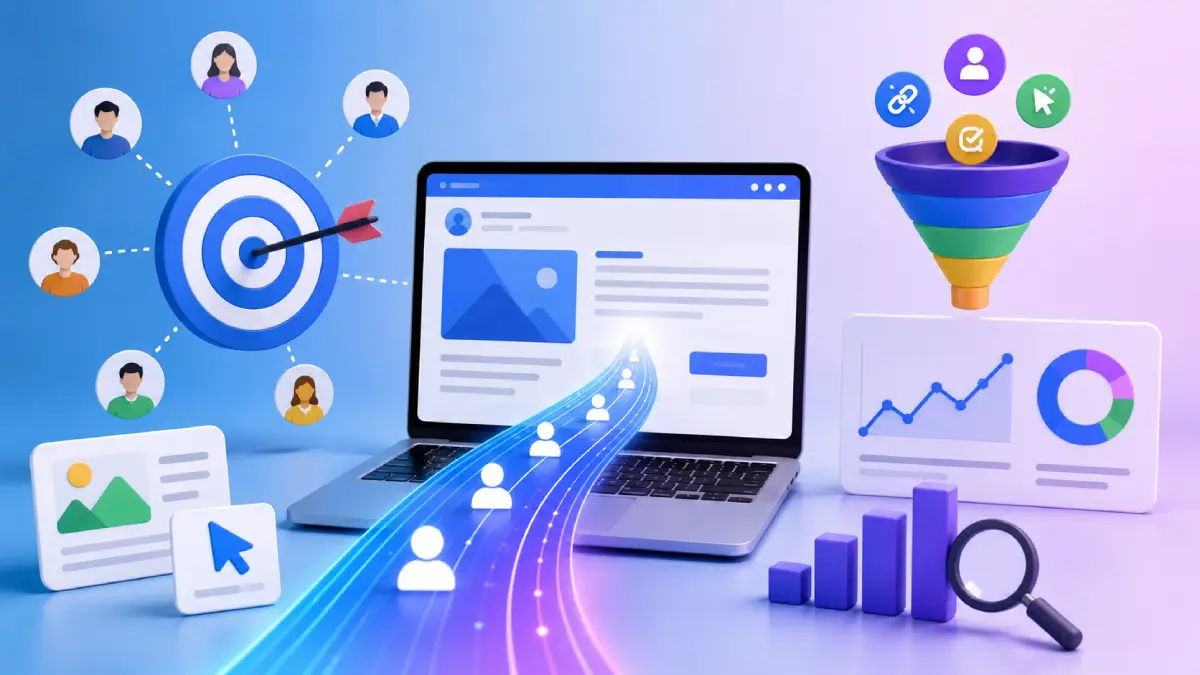
If you have ever run ads on Facebook or Instagram, you have likely come across the Traffic objective. It is designed to help businesses send people to a destination they choose, such as a website, online store, landing page, app, or messaging destination. Unlike campaigns focused directly on sales or leads, Traffic campaigns are mainly used when the goal is to increase visits and bring more people to a specific destination. Meta’s advertising system uses this objective to find people who are more likely to complete the selected traffic action.
1. Understanding the Traffic Objective
The purpose of the Traffic objective is to encourage people to visit a specific destination, such as a website, landing page, app, or messaging channel. Meta optimizes delivery based on the selected traffic goal, helping advertisers reach people who are more likely to complete that specific action, such as clicking a link or loading a page.
2. How a Traffic Campaign Works Behind the Scenes
When a person sees your ad on Facebook or Instagram, Meta’s delivery system analyzes signals such as user behavior, engagement patterns, and the selected campaign settings. Based on these signals, the algorithm identifies people who are more likely to complete the desired traffic action, such as clicking a link or visiting a landing page.
3. Optimization Goals Available for Traffic Campaigns
Meta allows advertisers to choose what action they want the Traffic campaign to optimize for. Available options may vary depending on campaign setup, destination, account settings, and region. Common traffic optimization options and destinations include:
- Link Clicks
- Landing Page Views
- Calls (where available)
- Messaging destinations such as Messenger or WhatsApp (where available)
- App destinations (where available)
Choosing the right optimization goal helps Meta’s system identify users who are more likely to take the desired action.
4. Link Clicks Versus Landing Page Views
Link Clicks measure users who click the ad link, while Landing Page Views measure users who successfully load the destination page. Because Landing Page Views consider whether the page actually loads, they can provide a clearer view of visitors who reached your website. For businesses focused on website traffic quality, this metric can provide more meaningful insights.
5. Where Traffic Campaigns Can Send People
Meta’s Traffic objective is not limited to a single kind of destination. Depending on the business goal, ads can direct users to:
- A business website
- An online store
- A blog post or article
- A dedicated landing page
- An app store page or app destination
- A messaging thread on Messenger or WhatsApp
6. What Makes a Traffic Campaign Actually Perform Well
Three elements tend to determine whether a Traffic campaign succeeds or quietly wastes budget.
The first is creative. Ads need visuals that stop the scroll, paired with a message that is clear about what happens next and a call-to-action that leaves no ambiguity.
The second is audience. It is not enough to reach a large number of people; the people reached need to have some genuine interest or intent related to what is being promoted.
The third, and often overlooked, is the landing page experience itself. A page that loads slowly, does not render properly on mobile, or fails to match what the ad promised will undo even the best-targeted campaign.
7. Metrics Worth Tracking Closely
Once a campaign is live, several metrics help measure performance:
- Link Clicks
- Landing Page Views
- Cost Per Result
- Cost Per Click (CPC)
- Click-Through Rate (CTR)
- Cost Per Landing Page View
- Frequency
- Reach and Impressions
Cost Per Result is an important metric because it shows the cost of achieving the action selected for optimization.
8. Mistakes That Quietly Drain Ad Budgets
A few recurring errors can reduce Traffic campaign performance. Optimizing for the wrong action, sending users to a page that does not match the ad message, and ignoring landing page performance are common problems. Another mistake is using Traffic campaigns when the actual goal is to generate leads, sales, or another action that requires a different optimization approach.
9. Practices That Tend to Improve Results
A handful of habits separate the accounts that get consistent value from this objective from the ones that burn through spend:
- Keep the ad’s message aligned with whatever the destination page actually says
- Use a clear, unambiguous call-to-action
- Test multiple creative variations rather than relying on one
- Monitor performance data regularly instead of letting campaigns run untouched
- Adjust targeting, creative, or optimization goals based on what the numbers actually show
10. When This Objective Makes the Most Sense
Traffic campaigns are useful when the main goal is increasing visitors to a destination. Businesses often use them to promote blog content, drive users to landing pages, increase website visits, or direct people to messaging channels. They can also help businesses build audiences that may be useful for future marketing activities.
11. Bringing It Together
At its core, the Traffic objective exists to encourage people to visit a chosen destination, whether that is a website, app, landing page, or messaging channel. Used correctly, it can help businesses attract interested visitors and guide them toward the next step. The key to success is selecting the right optimization goal because it influences which users Meta’s system is more likely to prioritize for ad delivery.