1. Introduction to Google Ads Conversion Data Sources
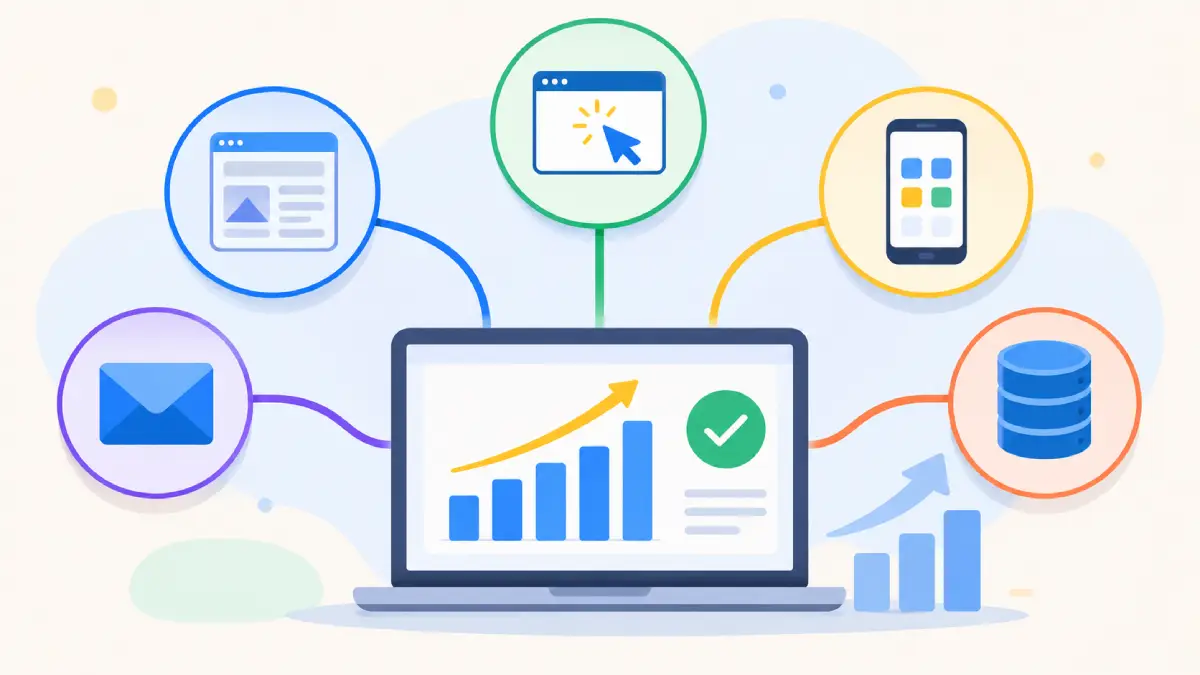
Google Ads conversion data sources are the channels through which Google Ads receives information about valuable actions customers take after interacting with an advertisement. Understanding these data sources is important because customers do not complete every action in the same place. Some make purchases on websites, others install apps, call businesses or complete purchases and sales offline. Google Ads provides four main options under Choose data sources to measure conversions:
- Conversions on a website
- Conversions on an app
- Conversion from phone calls
- Conversion offline
Each option represents a different conversion location and measurement approach. For example, a purchase may happen on a website, while the Google tag or Google Analytics 4 (GA4) reports that activity to Google Ads. Understanding these differences helps advertisers select the appropriate data sources based on how customers interact with their businesses.
2. The Four Data Sources for Conversion Measurement
2.1 Conversions on a Website
Website conversions are valuable actions that customers complete on a website after interacting with an advertisement. Common examples include:
- Completed purchases on an online store.
- Contact and quote form submissions.
- Account registrations and newsletter sign-ups.
- Booking confirmations and other meaningful interactions.
Website conversion measurement methods
Google Ads supports different methods for measuring website conversions, primarily through the Google tag and Google Analytics 4 (GA4).
- Google tag: Collects website activity and sends conversion information directly to Google Ads.
- Google Tag Manager (GTM): Helps advertisers manage and deploy the Google tag and other tracking tags, triggers and variables without manually editing website code for every tracking change.
- Google Analytics 4 (GA4): Records website events and allows relevant conversion events to be imported into Google Ads when both accounts are connected.
Advertisers can use the Google tag directly or deploy it through Google Tag Manager. They can also use GA4 as a conversion measurement source, depending on their tracking requirements. It is important to understand that Google Tag Manager is a tag management system, not a separate conversion measurement data source in the Google Ads setup.
Enhanced conversions for web
Enhanced conversions for web supplements existing conversion measurement with hashed first-party customer data, such as an email address provided during checkout. Google uses this information to improve conversion matching, including situations where customers switch devices before completing a purchase. Google has also introduced a unified enhanced conversions setting that brings enhanced conversions for web and enhanced conversions for leads under a common setting.
2.2 Conversions on an App
App conversions include installations and valuable actions that customers complete inside a mobile application. Common examples include:
- App installations.
- Account registrations.
- In-app purchases.
- Subscription sign-ups.
App conversion measurement methods
Google Analytics for Firebase is a major Google measurement solution for app conversions. Supported third-party app analytics providers can also send app installation and in-app event information to Google Ads. For example, a mobile gaming business may measure app installations and track in-app purchases to understand how advertising contributes to app growth and revenue.
App Connect
Businesses operating both websites and mobile applications may need to measure customer activity across these environments. App Connect supports app conversion tracking, bidding and deep linking between advertisements, websites and mobile applications. For example, a customer may interact with an advertisement on a mobile website, install the business’s app and complete a purchase inside the application.
2.3 Conversion from Phone Calls
Phone call conversions measure calls generated through Google Ads. For businesses such as clinics, law firms and home service providers, phone calls can be an important source of enquiries and sales.
Google Ads supports different types of phone call conversion measurement:
- Calls directly from ads: Customers call a business using a call button or phone number displayed with an advertisement.
- Calls to a phone number on a website: Customers visit a website after interacting with an advertisement and call the business using the displayed phone number. Google forwarding numbers, where supported, help connect these calls with the original advertising interaction.
- Clicks on phone numbers from mobile websites: Customers tap a phone number displayed on a mobile website to initiate a call. A phone number click does not necessarily mean that an actual call was completed.
Call reporting and call quality measurement
Call reporting provides information about calls generated through advertisements. Advertisers can also use minimum call duration to identify meaningful calls rather than counting every short or accidental call as a valuable conversion. Where available and eligible, Google’s AI-powered call analysis can help identify calls representing valuable leads, such as customers enquiring about appointments or services. Availability depends on supported countries and call requirements. It is important to distinguish between a phone number click and an actual phone call. A click records an attempt to initiate a call, whereas call measurement can provide information about the actual call and its duration.
2.4 Conversion Offline
Offline conversions are valuable customer actions that happen outside websites and mobile applications but can be connected to earlier advertising interactions.
Common examples include:
- Qualified leads confirmed by a sales team.
- Completed sales closed through phone calls or emails.
- Signed contracts.
- Purchases made at physical stores.
For example, a business may receive an enquiry through its website today but close the sale several weeks later. Offline conversion measurement helps connect that final sale with the original advertising interaction.
Offline conversion measurement methods
The main approaches include:
- Offline conversion imports: Businesses send conversion information from external systems to Google Ads, connecting completed outcomes with previous advertising interactions.
- Enhanced conversions for leads: This approach supplements offline conversion imports with hashed first-party customer information to improve conversion matching.
- CRM-based conversion data: Customer Relationship Management (CRM) systems store information about leads, sales and customer interactions. This information can be used to identify which advertising leads eventually become customers.
- Store sales measurement: Eligible retailers can connect in-store purchases with advertising interactions using supported measurement methods and data requirements.
Role of GCLID and first-party data
Google Click ID (GCLID) is an identifier associated with an advertising click. Businesses can store it with customer lead information and later provide it to Google Ads when that lead becomes a customer. First-party customer information, such as email addresses, provides another way to match offline outcomes with advertising interactions.
How enhanced conversions for leads work
When a customer submits a form on a website, the business can collect customer information and store it in its CRM. When that lead eventually converts into a sale, the business can provide the relevant customer information to Google Ads in a hashed format. Google uses this information to improve matching between the offline conversion and the original advertising interaction. Google has also moved offline conversion uploads and enhanced conversions for leads uploads toward the Data Manager API, making it important for businesses to use supported data upload methods.
3. Comparison of the Four Conversion Measurement Data Sources
| Data source | Where conversion happens | Common examples | Main measurement methods |
|---|---|---|---|
| Website | Website | Purchases, registrations and form submissions | Google tag, GA4 and enhanced conversions for web |
| App | Mobile application | Installs, purchases and subscriptions | Firebase and third-party app analytics |
| Phone calls | Telephone calls | Customer enquiries and service bookings | Call reporting, forwarding numbers and call duration |
| Offline | Outside websites and apps | Qualified leads, completed sales and store purchases | Offline imports, enhanced conversions for leads and CRM data |
Each data source measures a different part of the customer journey. Businesses should select the sources that reflect where their valuable customer actions actually happen.
4. Choosing the Right Data Sources for Conversion Measurement
The right starting point is to identify where customers complete the actions that matter most to a business. Different businesses may require different data sources:
- An e-commerce business may measure website purchases through the Google tag and app purchases through Firebase.
- A home service business may measure phone enquiries and import information about enquiries that eventually become paid jobs.
- A B2B business may track website form submissions and connect them with completed sales stored in its CRM.
- A retail business may measure website purchases, app transactions and eligible in-store sales.
Businesses may need more than one data source when customers interact with advertisements across multiple channels before completing a purchase. The important consideration is to select data sources that reflect the actual customer journey rather than measuring only the first interaction.
Conclusion
Google Ads provides four main data sources for conversion measurement: website, app, phone calls and offline conversions. Each helps advertisers measure valuable customer actions in a different environment. Understanding how these sources work, which measurement methods they use and when multiple sources are required helps businesses build a more complete picture of their advertising outcomes. Selecting the appropriate data sources ensures that conversion measurement reflects actual customer interactions and business results.