A customer clicks an advertisement, visits a website and completes a purchase. Ideally, Google Ads should be able to connect that purchase with the original advertising interaction. However, browser restrictions, cookie limitations and cross-device behaviour can make this connection difficult, leaving some conversions unmeasured or unattributed. To address these measurement challenges, Google introduced Enhanced Conversions, which uses additional customer-provided information to strengthen conversion matching. Understanding how this feature works, what information it uses and how it complements standard conversion tracking helps advertisers measure campaign performance more accurately.
1. What Are Enhanced Conversions in Google Ads?
Enhanced Conversions is a Google Ads feature that improves the accuracy of conversion measurement and provides additional signals for automated bidding. It supplements your existing conversion tracking by securely sending hashed first-party customer information, such as email addresses, phone numbers and other customer details, to Google. Google uses this information to match customers with signed-in Google Accounts that previously interacted with your advertisements. This helps Google Ads attribute conversions more accurately, including conversions that might otherwise go unmeasured because of browser restrictions, cookie limitations or cross-device behaviour.
Enhanced Conversions does not replace standard conversion tracking. It adds customer-provided information to existing conversion data, giving Google additional signals to improve measurement and campaign optimization.
Three important points explain its role in Google Ads:
- First-party data: It uses information customers provide directly to your business, such as an email address entered during checkout or a lead form submission.
- Improved matching: It helps Google connect recorded conversions with relevant advertising interactions.
- Better optimization signals: More complete conversion information can support automated bidding strategies by providing additional data for optimization.
2. How Enhanced Conversions Work
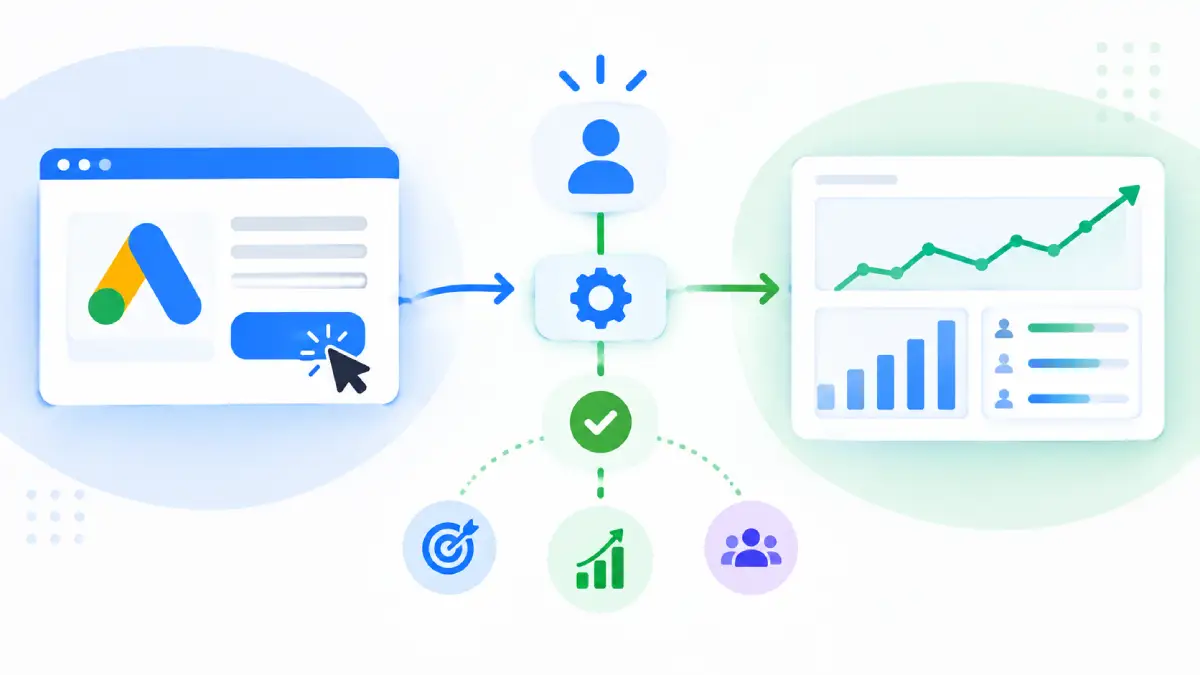
Enhanced Conversions follows a sequence that connects customer information with advertising interactions:
- A user interacts with a Google advertisement, such as clicking a Search ad or viewing a YouTube ad.
- The user later completes a conversion on your website, such as making a purchase or submitting a registration form.
- Eligible first-party customer information, such as an email address or phone number, is collected during the conversion process.
- The information is normalized, meaning it is cleaned and standardized into the required format.
- The relevant customer information is hashed using the SHA-256 algorithm.
- The hashed information is securely sent to Google.
- Google uses the hashed information to match the customer with relevant signed-in Google Accounts that interacted with its advertisements.
- The additional matching information helps Google Ads attribute conversions and improve conversion measurement.
2.1 Understanding First-Party Customer Data
First-party data is information customers provide directly to your business through your own channels. Examples include details entered during checkout, registration, account creation or lead form submission. For Enhanced Conversions, this information helps Google identify customers associated with recorded conversions and match them with relevant advertising interactions. Unlike third-party information collected from external sources, first-party data comes directly from interactions between customers and your business.
2.2 Understanding SHA-256 Hashing
Hashing is a process that converts readable information into a fixed-length string of characters. Google uses SHA-256, a one-way hashing algorithm, to protect eligible customer information before sending it. For example, an email address is converted into a hashed value that cannot be directly understood by someone viewing the transmitted data. The same input produces the same hash, allowing Google to compare matching values. However, hashing does not make personal information completely anonymous or remove privacy responsibilities. Advertisers must still follow applicable privacy laws, consent requirements and Google’s customer data policies.
3. What Customer Information Can Be Used in Enhanced Conversions?
Enhanced Conversions can use several categories of customer-provided information:
- Email address
- Phone number
- First name and last name
- Address information, including street address, city, region, postal code and country
Each data field provides additional information that can help Google match customers with signed-in Google Accounts. Email addresses and phone numbers provide useful matching information, while names and address details can offer additional matching signals. The availability, accuracy and formatting of the submitted information influence matching results. Google has specific formatting and data-handling requirements for these fields. The individual collection methods and configuration requirements are covered separately under Enhanced Conversions for Web and Enhanced Conversions for Leads.
4. Benefits of Enhanced Conversions in Google Ads
4.1 Improved Conversion Measurement
Browser restrictions, cookie limitations and other tracking challenges can make it difficult to measure every conversion accurately. Enhanced Conversions adds first-party customer information to existing conversion data, helping Google recover conversions that might otherwise remain unmeasured.
4.2 Better Understanding of Advertising Performance
More complete conversion measurement helps advertisers understand how advertising interactions contribute to customer actions. This provides a more comprehensive view of campaign performance and supports better-informed decisions.
4.3 Support for Automated Bidding
Google’s automated bidding strategies use conversion data to determine which advertising interactions are more likely to produce valuable results. Enhanced Conversions can provide additional measurement signals, helping automated bidding work with a more complete set of conversion information.
4.4 Better Utilization of First-Party Data
Businesses already collect customer information through purchases, registrations and enquiries. Enhanced Conversions allows eligible information to support advertising measurement without requiring businesses to depend entirely on traditional tracking identifiers.
4.5 Privacy-Conscious Measurement
Customer information is hashed using SHA-256 before being sent to Google. This prevents the original information from being transmitted in readable form. However, hashing is only one part of responsible data handling. Advertisers must also comply with applicable privacy requirements, obtain appropriate consent and follow Google’s customer data policies.
Important: Enhanced Conversions improves conversion measurement; it does not guarantee more actual conversions, lower acquisition costs or higher return on ad spend.
5. Enhanced Conversions vs Standard Conversion Tracking
Standard conversion tracking records actions that advertisers have configured as conversions, such as purchases, form submissions or registrations. It uses available tracking signals to connect these actions with advertising interactions. Enhanced Conversions builds on this existing tracking by adding hashed first-party customer information to help improve conversion matching.
The key differences are:
| Standard Conversion Tracking | Enhanced Conversions |
|---|---|
| Records configured conversion events. | Supplements existing conversion data. |
| Uses available tracking identifiers and signals. | Adds hashed first-party customer information. |
| Establishes which customer actions count as conversions. | Helps improve the matching and attribution of recorded conversions. |
| Works independently when properly configured. | Requires an existing conversion tracking setup. |
Both work together rather than replacing one another. Standard conversion tracking records the conversion event, while Enhanced Conversions provides additional information to improve measurement.
6. Types of Enhanced Conversions in Google Ads
Google Ads has two distinct approaches to Enhanced Conversions, each serving a different measurement purpose.
6.1 Enhanced Conversions for Web
Enhanced Conversions for Web improves the measurement of online conversions that happen directly on a website, such as purchases, registrations and sign-ups. It uses eligible first-party customer information collected during the conversion process to help match website conversions with relevant Google advertising interactions.
6.2 Enhanced Conversions for Leads
Enhanced Conversions for Leads improves the measurement of offline outcomes that originate from website-generated leads.
For example, a visitor may submit an enquiry form on a website. The business later contacts the visitor, qualifies the lead and eventually completes a sale. The business can import the relevant offline conversion information along with matching customer data to help Google connect that outcome with the original advertising interaction.
Unlike Enhanced Conversions for Web, which focuses on online website conversions, this approach connects website-generated leads with subsequent offline outcomes.
6.3 Unified Enhanced Conversions Setting
Google has combined Enhanced Conversions for Web and Enhanced Conversions for Leads under a single on/off setting. However, both retain their distinct measurement purposes. Google Ads also supports receiving user-provided data through multiple sources, including website tags, Data Manager and API connections simultaneously. Advertisers no longer need to rely on just one data source or implementation method. The individual implementation methods and configuration requirements are covered separately.
7. Requirements and Important Considerations
7.1 Existing Conversion Tracking
A properly configured conversion action must already be in place. Enhanced Conversions supplements existing conversion data, so standard conversion tracking must first record the relevant events correctly.
7.2 Availability of First-Party Customer Data
Eligible customer information must be available for the relevant conversion or imported offline outcome. Without suitable customer information, Enhanced Conversions cannot provide the additional matching signals.
7.3 Data Quality and Formatting
Customer information must follow Google’s formatting requirements. Incorrect email addresses, incomplete details or inconsistent formatting can reduce the likelihood of successful matching.
7.4 Customer Data Policies
Advertisers must review and accept Google’s applicable customer data terms when enabling Enhanced Conversions. They are responsible for ensuring that the information they collect and share complies with these policies.
7.5 Privacy and Consent Requirements
Advertisers must follow applicable privacy laws, consent requirements and Google’s policies when collecting and using customer information. Hashing protects information during transmission but does not replace these responsibilities.
8. Recent Changes to Enhanced Conversions in Google Ads
8.1 Unified Enhanced Conversions Setting
Enhanced Conversions for Web and Enhanced Conversions for Leads now share a single on/off setting. Existing users are being migrated to this unified setting, simplifying account management while preserving the distinct purposes of both approaches.
8.2 Support for Multiple Data Sources
Google Ads now accepts user-provided data from website tags, Data Manager and API connections simultaneously. This allows advertisers to use multiple supported sources together instead of choosing only one implementation method.
8.3 Changes to Offline Conversion Imports
Google has introduced changes to offline conversion imports and Enhanced Conversions for Leads API integrations. From June 15, 2026, certain legacy Google Ads API upload requests are restricted, with access depending on previous API usage and eligibility. The Data Manager API is the recommended option for new and ongoing offline conversion and Enhanced Conversions for Leads integrations. Advertisers using existing API integrations should check Google’s current migration and compatibility requirements before making changes.
9. Common Misconceptions About Enhanced Conversions
- Enhanced Conversions Replaces Standard Conversion Tracking: It does not. Enhanced Conversions supplements existing conversion tracking and depends on a properly configured conversion action.
- Hashing Makes Customer Data Completely Anonymous: Hashing makes customer information unreadable in its original form, but it does not automatically make the information anonymous. Privacy and consent responsibilities still apply.
- Enhanced Conversions Guarantees More Conversions: It improves measurement and matching, not actual business results. It may help recover conversions that were previously unmeasured, but it does not generate additional customers.
- Enhanced Conversions Automatically Fixes Tracking Problems: It cannot repair broken conversion tags, incorrect conversion actions or improperly configured tracking. These issues must be resolved before Enhanced Conversions can provide reliable additional measurement signals.
10. Conclusion
Enhanced Conversions strengthens Google Ads conversion measurement by adding hashed first-party customer information to existing conversion tracking. By improving the connection between customer actions and advertising interactions, it can provide more complete conversion reporting and additional signals for automated bidding. Understanding the differences between Enhanced Conversions for Web and Enhanced Conversions for Leads also helps advertisers identify the right measurement approach for their business.