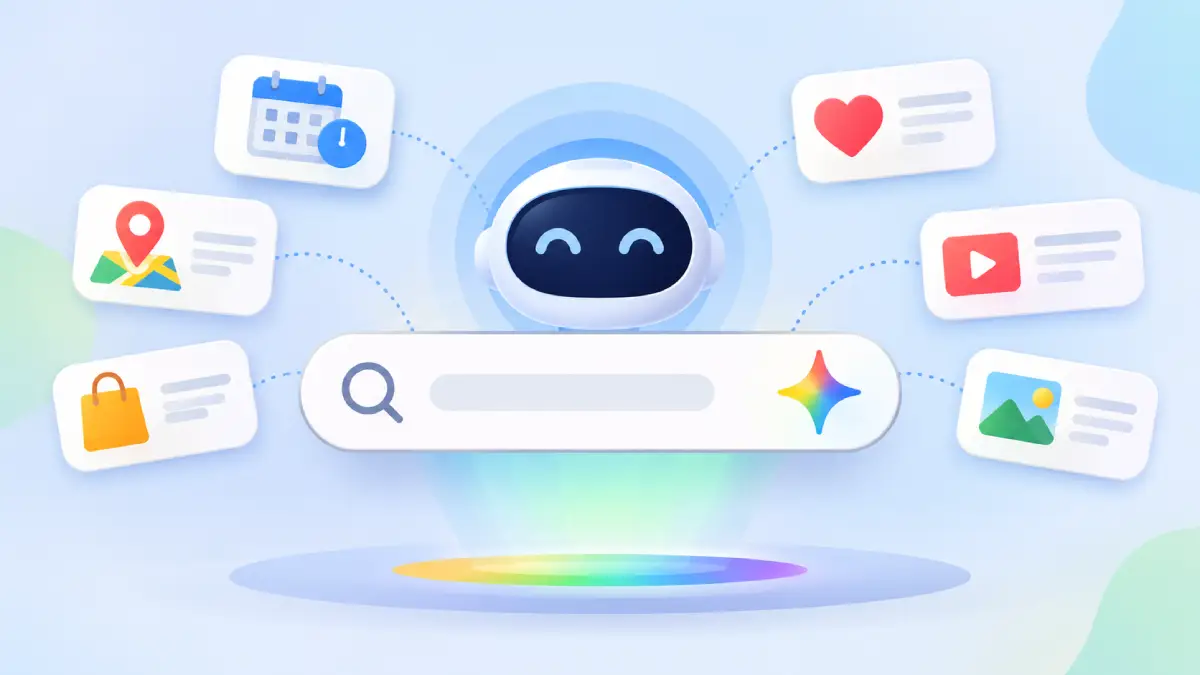
Google is making Search more personal by expanding a feature called Personal Intelligence to Google Search AI Mode. It allows users to connect their Google apps so AI Mode can use relevant personal information to provide more tailored answers. The feature initially supported Gmail and Google Photos, helping Google move beyond general search results towards a more context-aware search experience.
How It Works
Once enabled, Google Search AI Mode can use information from connected apps to understand a user’s plans, preferences and interests. For example, it can refer to travel bookings in Gmail or past experiences saved in Google Photos to make its recommendations more relevant. Google has shared several examples of how this works:
- Travel planning: Hotel bookings in Gmail and travel memories in Google Photos can help suggest places to visit and restaurants to try.
- Clothing recommendations: Flight details in Gmail can help generate clothing suggestions suited to the destination and planned trip.
- Shopping suggestions: Information about previous purchases and preferred brands or styles can help tailor shopping recommendations.
Google is also expanding Personal Intelligence to support additional connected services, including Google Wallet, with Google Drive integration planned. This gives AI Mode access to a broader range of personal context, where supported. The main idea is to reduce the need for users to repeatedly explain their preferences, purchases or travel plans when asking questions.
Privacy and Control
Connecting personal apps raises understandable privacy concerns. Google says Personal Intelligence is optional, meaning users must choose to connect their apps and can disconnect them whenever they want. Google also says it does not directly train its AI models on the full contents of a user’s Gmail inbox or Google Photos library. However, certain information derived from connected content, such as summaries or inferences, may be used to improve its AI models. Users can see when AI Mode is using connected information and choose the “Try without personalization” option to generate a response without that personal context. Google also acknowledges that Personal Intelligence may sometimes misunderstand information or connect unrelated details. Users can correct these mistakes through feedback or follow-up questions.
Who Can Use It
Personal Intelligence first launched as a Labs experiment in January 2026, initially for eligible Google AI Pro and AI Ultra subscribers in the United States. Google expanded its availability in March, and the feature has continued to reach more users and regions. The connected services now include Gmail, Google Calendar, Google Photos, Google Wallet and Google Drive, although availability varies by app, country and language. Google is also preparing to connect the Gemini app with AI Mode, allowing users to carry context between the two experiences. The feature requires a personal Google account and is not intended for Google Workspace business, enterprise or education accounts. Users must also meet Google’s age and regional eligibility requirements.
What It Means for Everyday Users
Google Search AI Mode is gradually becoming more than a tool for finding information. By using personal context from connected apps, it can act as a more helpful travel planner, shopping assistant and everyday recommendation tool. For users, this could mean less time explaining their preferences and more relevant answers based on information they already have in Google’s services. However, greater personalization also means giving Search access to more personal information. Users should understand how connected data is handled before enabling the feature and connect only the services they are comfortable sharing. As Google continues to bring its apps and AI services closer together, Personal Intelligence represents a broader shift in search towards experiences that combine general information with each user’s personal context.