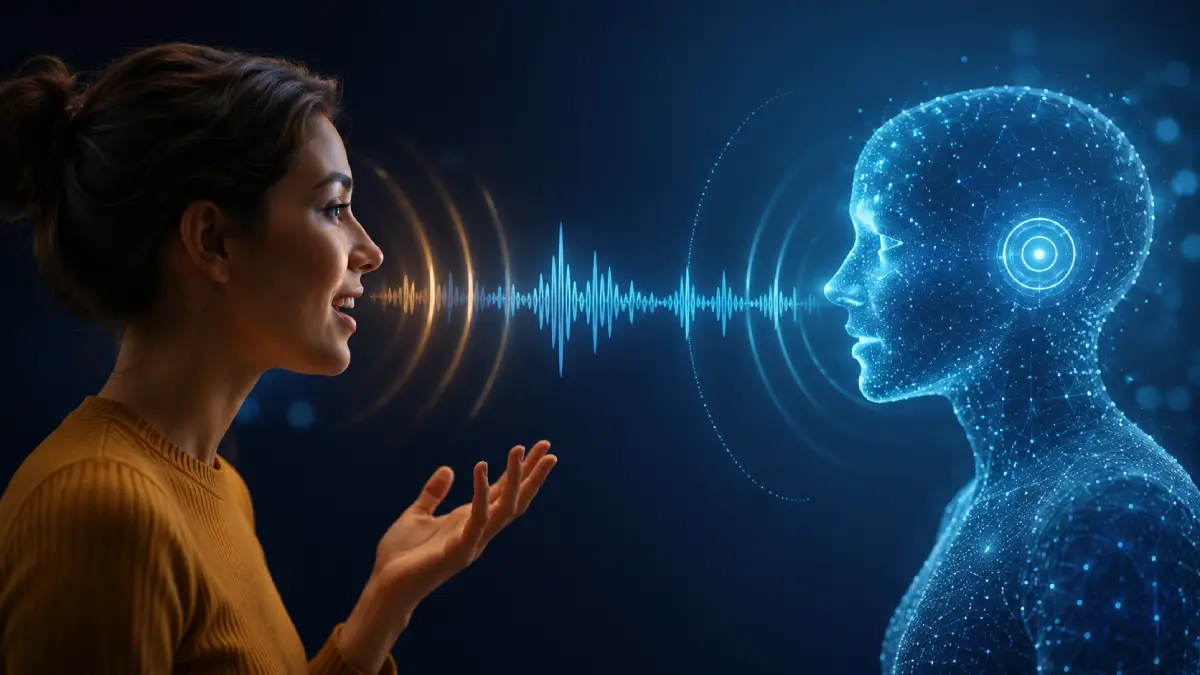
OpenAI just gave ChatGPT a new voice, and this time it actually knows how to have a conversation.
The company launched GPT-Live, a pair of new voice models that fundamentally redesign how people talk to ChatGPT, replacing the existing Advanced Voice Mode with an architecture that can listen and speak simultaneously, much like an actual human conversation. The two versions, GPT-Live-1 and GPT-Live-1 mini, are rolling out globally across iOS, Android, and ChatGPT.com.
Paid subscribers on Go, Plus, and Pro get the full GPT-Live-1 model by default, while GPT-Live-1 mini is designated for free-tier users.
Why This Matters
Every version of ChatGPT Voice until now worked in turns: you talk, it processes, it replies. That gap, however small, always gave away that you were talking to software.
GPT-Live runs on what OpenAI calls full-duplex architecture, letting the model listen and generate a response at the same time, making rapid decisions about whether to interject, stay silent, hold a thought, or hand off to a heavier process running underneath the conversation.
So when you ask something that needs real digging, the model doesn’t freeze up. It keeps talking with small verbal cues while heavier computation happens in parallel, and delivers the answer mid-flow instead of after an awkward silence.
Under the hood, that heavy lifting is handled elsewhere. At launch, GPT-Live uses GPT-5.5 in the background for questions requiring web search, deeper reasoning, or more complex work. Users can also pick how much thinking they want, choosing between Instant, Medium, and High reasoning levels.
The Numbers
The claims aren’t just marketing fluff, either. When OpenAI put GPT-Live-1 and its mini version up against the old Advanced Voice Mode in blind tests, people picked the new models roughly three out of four times 75.7 percent for GPT-Live-1 and 69.2 percent for the mini. Given that voice features already see over 150 million people using them weekly, that’s not a small win.
There’s also a visual layer now. GPT-Live introduces visual cards for weather, stocks, sports, and maps that surface while you’re still talking, so a conversation doesn’t have to stop just because you need to glance at something.
What’s Missing For Now
It’s still a work in progress, though. Right now, GPT-Live can’t handle video calls or screen sharing, something OpenAI says is on the roadmap but hasn’t put a date on. Developers hoping to build with it will have to wait too. There’s a sign-up list for API access, but no launch window has been shared yet.
Safety got attention as well. OpenAI added dedicated safety training for voice, along with teen protections through Parental Controls and notifications tied to self-harm risk signals.
The Bigger Picture
Even Sam Altman seems a little surprised by this one. He’s called it “magical,” which is kind of funny coming from a guy who’s spent years trying to get people comfortable typing to a machine instead of talking to it. Whether that wow factor sticks around after the first few conversations, who knows. But it’s pretty clear what OpenAI is chasing here they don’t want this to feel like some feature you tap on and off. They want it to feel like you’re just… talking to someone.